
Reflections from the Arctic Circle Assembly
By Sofia Karalekas
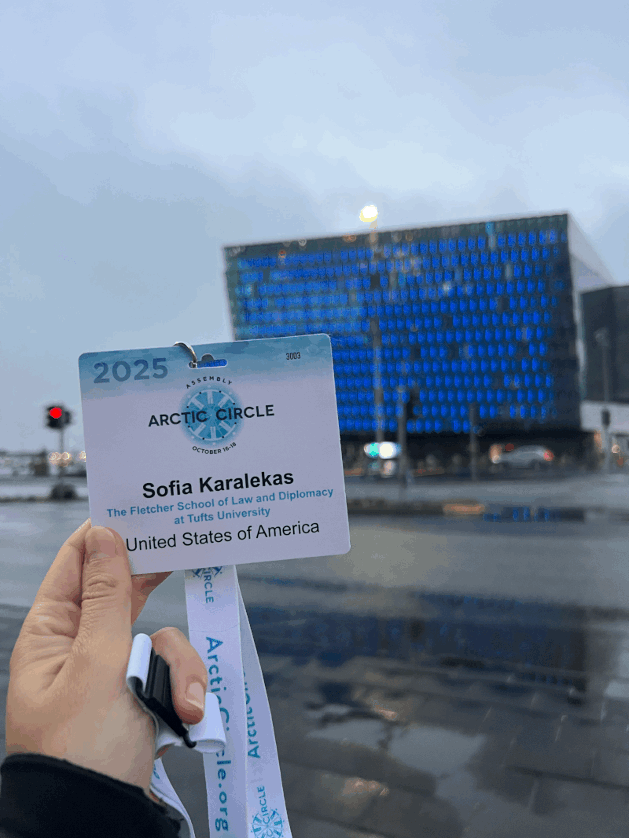
This October, I was fortunate to travel to Reykjavik, Iceland, for the Arctic Circle Assembly. The annual Arctic Circle Assembly brings together governments, organizations, corporations, universities, think tanks, environmental associations, Indigenous communities, students, and more for a series of dialogues on the state of Arctic issues. As a second year MALD candidate at the Fletcher School of Law and Diplomacy studying international environmental policy and international security with a focus on energy security, this conference was highly applicable to my fields of study and served as a valuable experiential learning opportunity for learning more about the Arctic region.

Full Fletcher Cohort at the Assembly
The Arctic Circle Assembly was held at the Harpa Concert Hall and Conference Center, a beautiful building right next to the old harbor in downtown Reykjavik. The assembly was three days long, and each day, I had the chance to attend panels on a variety of arctic issues, including green energy in the arctic, sustainable arctic innovation, arctic securitization and militarization, critical minerals and deep-sea mining in the Arctic Circle, shipping and trade through the Northwest Passage, and so much more. On the first day, I downloaded the “Arctic Circle Assembly” app, which allows you to build your assembly schedule virtually, and I was blown away by the number of panels and the quality of their content. It was immensely difficult to choose between panels, but all generally focused on arctic affairs and geopolitics, so I found myself getting something worthwhile out of every panel I attended. Nearly all the panels featured insightful discussions on arctic energy issues — from extraction to land use and natural resource supply — featuring Indigenous, state, and corporate voices. This was highly relevant to my academic focus at Fletcher of energy security, and it allowed me to hear new perspectives I had not previously been exposed to, particularly from the Inuit representatives and reindeer husbandry experts.
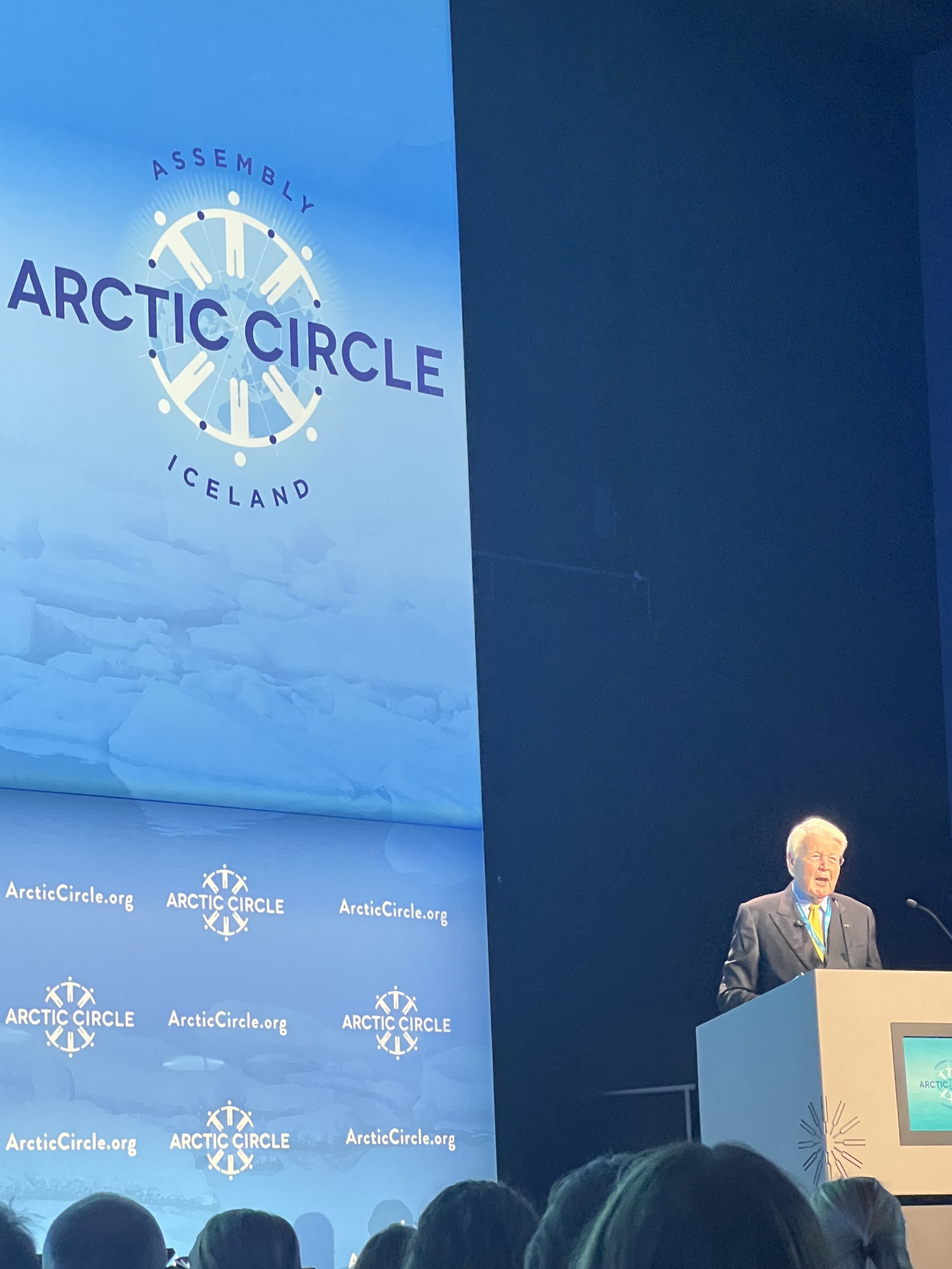
The Former President of Iceland
My favorite panel was a session titled "The Changing Geopolitics of the Arctic: Views From the Indo-Pacific." Here, I learned about how India, South Korea, and China's interests play into arctic affairs as non-arctic states. In addition, at the Plenary sessions (when the entire assembly comes together in one venue), I heard from the former President of Iceland, Ólafur Ragnar Grímsson, for multiple days straight, and I even got the chance to meet him on the last day! I was also lucky enough to speak with Admiral Giuseppe Cavo Dragone, the Chair of the NATO Military Committee, about NATO's perspective on arctic issues and involvement in the Arctic after his informative talk at the Plenary session on NATO in the Arctic. It was surreal to meet such important figures in the international affairs world – an opportunity unlike any other.
Aside from panels, the assembly featured various booths from a wide selection of organizations and universities. I particularly enjoyed chatting with representatives from UArctic, as well as the the Arctic University of Norway (UiT), with whom I engaged in deep conversations about how shipping through the Northwest Passage disrupts biodiversity and whale migration patterns. At large, every person I spoke to at the assembly had something new to share. After three full days at the assembly – from 8:00 am to 9:00 pm – I left feeling genuinely transformed: more informed about Arctic issues, noticeably sharper in my understanding of energy and security, and newly inspired by topics I had not previously explored.
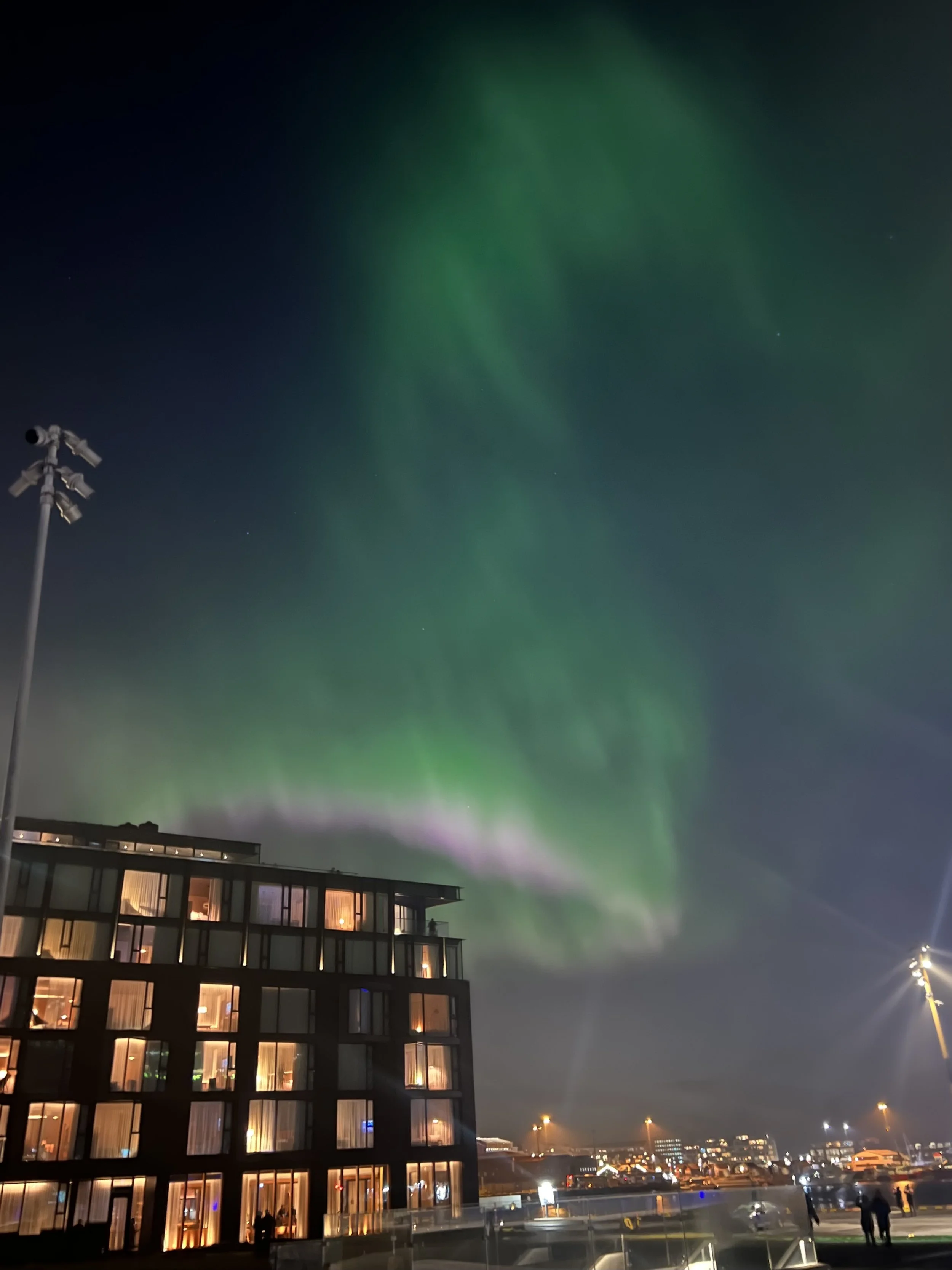
The Northern Lights Outside the Conference Hall
When I was not at the assembly, I spent time exploring what Reykjavik has to offer. I checked out the Whales of Iceland museum, as well as the Þúfa art installation, which features a small wooden house with drying fish at the top. I shopped for traditional Icelandic sweaters, known as lopapeysas, of which I purchased two. I particularly enjoyed experiencing Reykjavik’s food scene as well – I ate at the famous Fiskmarkaðurinn, which features outstanding traditional Icelandic dishes as well as fresh sushi, and I even tried the famous lamb hotdogs at Bæjarins Beztu Pylsur. However, I must confess that my favorite part of Iceland (aside from the assembly of course) was getting to see the northern lights on my last night in Reykjavik, which appeared during the assembly’s final reception. Seeing the northern lights has been on my bucket list for years and witnessing them in person was surreal.
Overall, attending the Arctic Circle Assembly was an unforgettable professional and personal experience. I am much more informed on arctic geopolitics, sustainability, and security as a result of my attendance, and I hope to attend the conference again next year. I am immensely grateful for the support of Fletcher’s Center for International Environment & Resource Policy, which made my goal of attending this assembly a reality. I look forward to using everything I have learned at the Arctic Circle Assembly in both my current studies and future professional career in international affairs!
Sofia Karalekas is a MALD candidate at the Fletcher School of Law and Diplomacy at Tufts University studying International Environmental Policy and International Security. She recently earned her BA in Political Science and her BA in Human Rights from the University of Connecticut, where she graduated Summa Cum Laude. She strongly values experiential learning opportunities and is looking forward to pursuing a career in international affairs after graduation.