
Diary of a Week in Belém, Brazil
By Michela Malagoli
Monday — Mutirão and Entrepreneurship
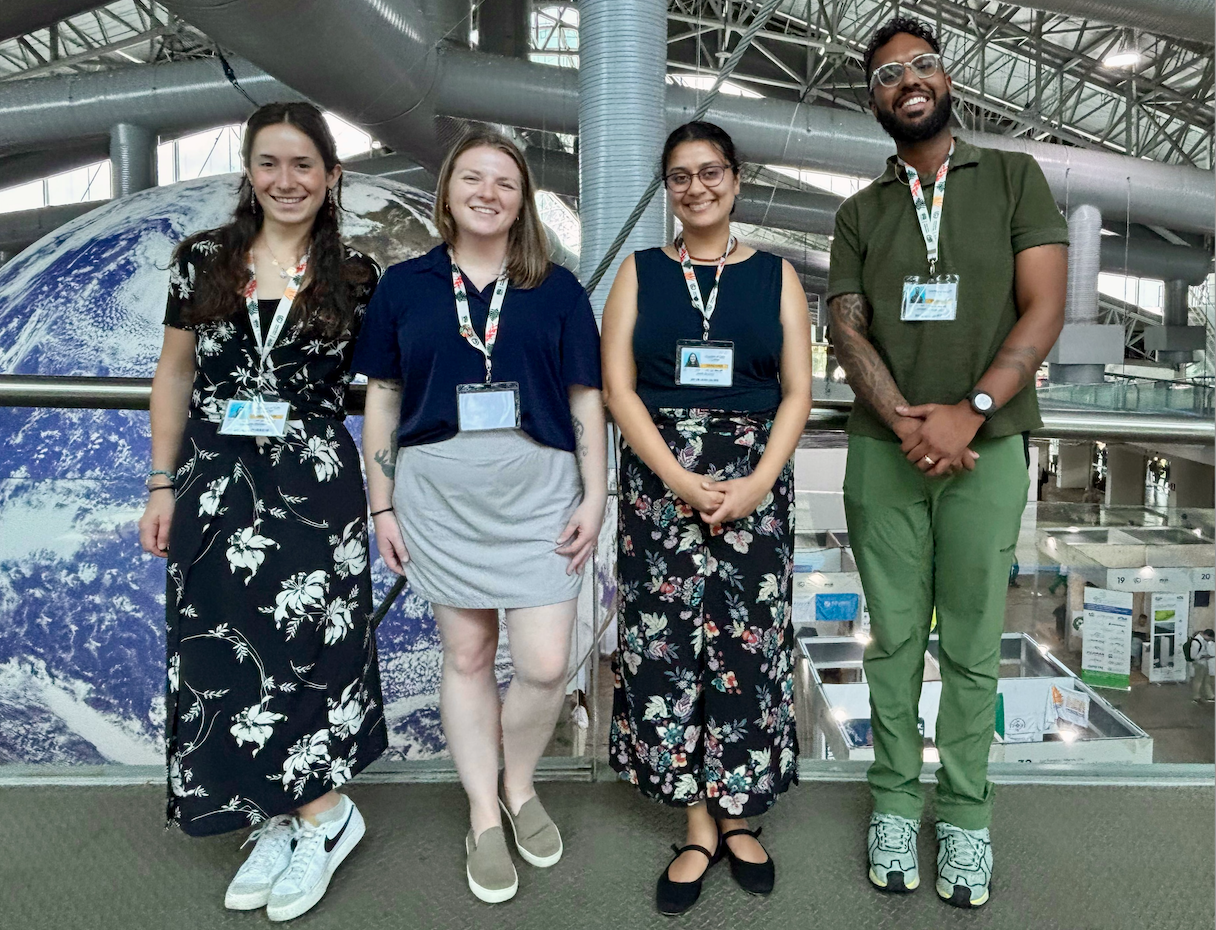
The week opened with a sense of movement. Mutirão is a Brazilian word I heard early in the morning, and it stayed with me for the entire week and beyond. It captures the energy of people coming together to build something bigger than what any of us could accomplish alone. That’s exactly how the venue felt. Delegates, students, founders, researchers, and activists were all packed into the COP space with the same sense of climate urgency. Putting a name to that indescribable feeling brought people together in a fascinating way, and you could genuinely feel the shared momentum in the air.
While mutirão shaped the atmosphere, I also spent the day in panels and conversations centered on entrepreneurship and innovation — themes closely tied to my journey and my work at FedTech. It stood out to me how grounded the conversations were. No glossy narratives. Instead, a practical approach that comes through when people face constraints and still decide to act. I had the chance to speak with practitioners working on pilots, prototypes, community-led ideas, and new tools or services. It made the climate space feel alive and dynamic.
Alongside this positive energy, the systemic inequalities tied to climate challenges were impossible to ignore. Already on the first day, it was clear how the potential of entrepreneurship shifts depending on where in the world people are based. In countries with less capital and fewer resources, the odds of scaling an idea or accessing support are significantly lower than in wealthier regions. Again and again, the solution pointed to the global north sharing resources and building the conditions to bridge this inequity gap — something that still needs far more commitment and follow-through. This theme kept resurfacing throughout the week, and I’m glad it did. It’s a necessary reminder that without structural change, impact will always be uneven.
Monday showed that when mutirão meets entrepreneurship, agency grows. Climate action is collective, but it’s carried by people who dare to try. However, to truly enable that, we need to first address systemic inequalities and bridge the resource gaps that keep many from stepping into their full potential.
Tuesday — Frameworks, CSR, and the Role of the Private Sector
On Tuesday, the rhythm shifted toward the power of structure and modeling. I spent hours in sessions that leaned heavily on frameworks — the SDGs, sector roadmaps, ESG principles, ISO standards, SBTi, and updated transition pathways. As someone working in sustainability with a focus in corporate social responsibility (CSR) strategies and metrics, I’m usually the first to admit that it’s easy to dismiss these tools as high-level or scattered. But watching how they shaped real discussions made their relevance clear. They offer a shared vocabulary and a mental framework for people who don’t share the same background, discipline, or expertise. Without them, conversations around metrics and accountability would fall apart.
The private sector appeared in almost every room I stepped into. Not only corporations showcasing progress, but investors, accelerators, consultancies, and financial institutions trying to figure out how climate finance can actually reach the places where it’s most needed. Some commitments felt ambitious and sincere; others felt more curated. But the trend was unmistakable: companies are no longer on the sidelines. They do help in shaping the conversation — sometimes pushing it forward, sometimes complicating it.
Across panels and side events, the importance for organization to adopt clear CSR strategy kept coming up as a prerequisite for moving from aspiration to action. Most stakeholders agreed that a well-designed sustainability, climate friendly framework is essential to support a data-driven and accountable climate transition at every scale. This is where having a model of reference, changes the cards on the table: it takes good intentions and gives them structure, direction, and a path to implementation.
Tuesday left me with a subtle but persistent question: can we align private incentives with public ambition fast enough? It’s a tension COP is still learning how to manage. Still, I was glad to see private sector representatives actively present — not only talking about climate transition, but offering tools, capital, and incentives to help accelerate it.
Wednesday — Climate Work Through a Global Lens
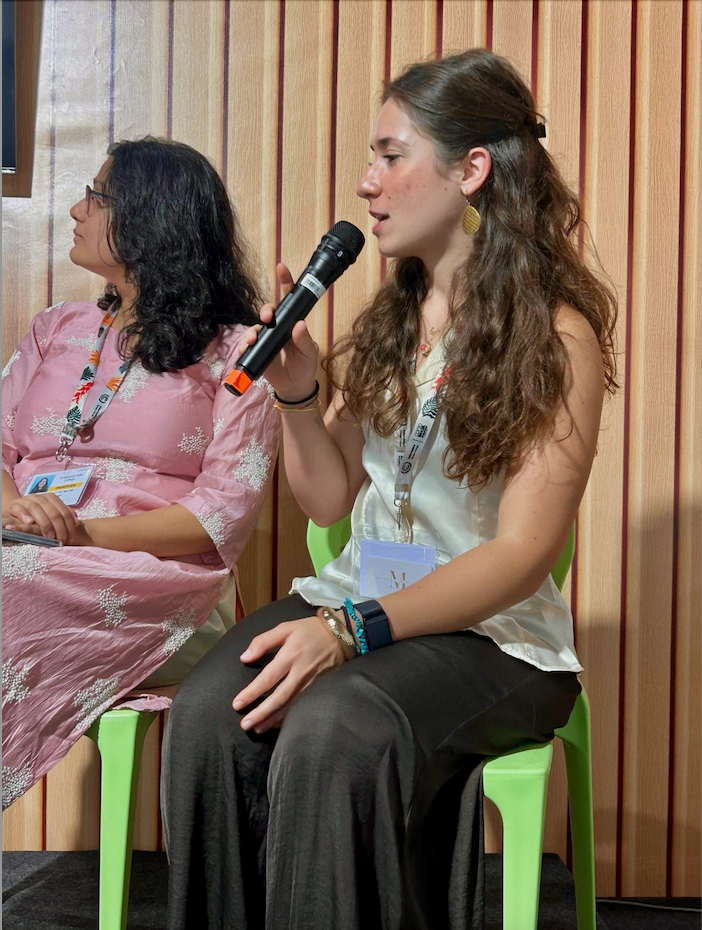
Wednesday was the most global day of the week. I had the invaluable opportunity to moderate a panel on cross-cultural and interdisciplinary collaboration, exploring how different approaches can shape future climate leadership across systems. Sharing the stage with peers from multiple continents made the complexity of climate work feel both overwhelming and completely natural. Everyone brought their own lens, shaped by the landscapes, histories, and academic traditions they come from.
Later in the day, I drifted closer to home — spending time between the Italian Pavilion and the Mediterranean Pavilion. Each space carried its own cultural anchor point: Italy balancing heritage with innovation, and the Mediterranean Pavilion emphasizing shared environmental pressures, water scarcity, coastal vulnerabilities, and the need for cross-border cooperation.
Hearing these voices side by side reinforced something I’ve felt throughout my path so far — global exposure fundamentally changes how you see the world and how you understand climate work through a systems-thinking lens. You stop searching for a single narrative and start noticing patterns, tensions, overlaps, and contradictions.
However, moving across these spaces also made me confront the privilege behind attending a COP in the first place. Too many voices never make it into these rooms — especially those facing the harshest impacts of climate change. Hosting COP in Brazil brought a welcome shift, allowing many Indigenous and underrepresented communities to be present and acknowledged in person, yet their visibility also highlighted how many perspectives still remain absent. It was a harsh reminder that for those who do get to be here, the responsibility is to carry forward the voices and stories of those who aren’t present, to listen carefully, and to represent as fully as possible. Wednesday was a day of stitching together those threads.
Thursday — Observing, Learning, and an Unexpected Fire
Being an observer at COP teaches you a certain humility. You’re close enough to feel the weight of negotiations, but not inside the closed rooms where decisions take their final shape. Your role is fluid — you can blend into the background or stand out depending on how you position yourself — and that can shift at any moment. You learn by watching the transitions, the side conversations, the body language of different delegations as they move through the day. Thursday deepened that sense for me. It was slower, more introspective — until the fire happened.
Around midday, an electrical fire in the Blue Zone brought everything to a halt. I was sitting just a few stands away and didn’t grasp what was happening until I saw people running outside. Within seconds, everyone was trying to understand what had happened and whether things would resume. It wasn’t dramatic, but it was unsettling — and it surfaced an important reality: hosting COP in a country with fewer resources reveals the fragility behind events of this scale.
Brazil has hosted with warmth, energy, and generosity, but it also faces constraints that wealthier hosts rarely have to navigate. The fire became a moment of reflection on the systemic inequalities tied to the global challenge of climate change. Climate negotiations don’t unfold in a vacuum. They depend on infrastructure, safety systems, logistics, and countless layers of invisible labor. Thursday was a hot reminder of that.
Friday — Why COP Still Matters
By Friday, the week’s intensity softened. The corridors felt emptier, the air slower. All the stimuli gathered over the week finally had space to settle and simmer. Many delegations were buried in negotiations, while others drifted between their last meetings. The pavilions were closed, and only negotiation sessions were allowed. That shift created room to reflect on the purpose of COP itself — why people gather, and why it still matters. The criticism is familiar: it’s expensive, chaotic, political, and sometimes more symbolic than substantive. But being here makes it hard to dismiss.
COP matters because it creates a moment when the world has to pay attention at the same time. It creates momentum — mutirão — that forces alignment, even if imperfect. It brings ministers, scientists, youth, corporations, civil society, and researchers into the same orbit for a brief period, something that doesn’t happen anywhere else. Negotiations move text forward; pavilions move ideas forward; people build the relationships that make long-term work possible. That mix is messy but necessary.
Friday left me thinking that the value of COP isn’t only in the final decision documents — which can be disappointing at times. It lies in the yearly practice of coming together, resetting expectations, challenging slow progress, and staying connected to a global community trying — sometimes clumsily, sometimes boldly — to steer in a better direction.
Thank you to everyone who made this experience possible and meaningful — those beside me in Belém and those supporting me from afar.
Michela Malagoli is an MS in Sustainability candidate at Tufts University in the Urban and Environmental Policy and Planning (UEP) Department, focusing on corporate social responsibility, climate tech innovation ecosystems, and sustainable business development. Grounded in systems thinking, her work informs sustainability strategy through data-driven and holistic ecosystem analysis, examining how organizations translate commitments into scalable, measurable impact across sectors and geographies.