
Reflections from UNFCCC COP30 – Building Bridges between Negotiations and Side Events
By Joshua Cohen
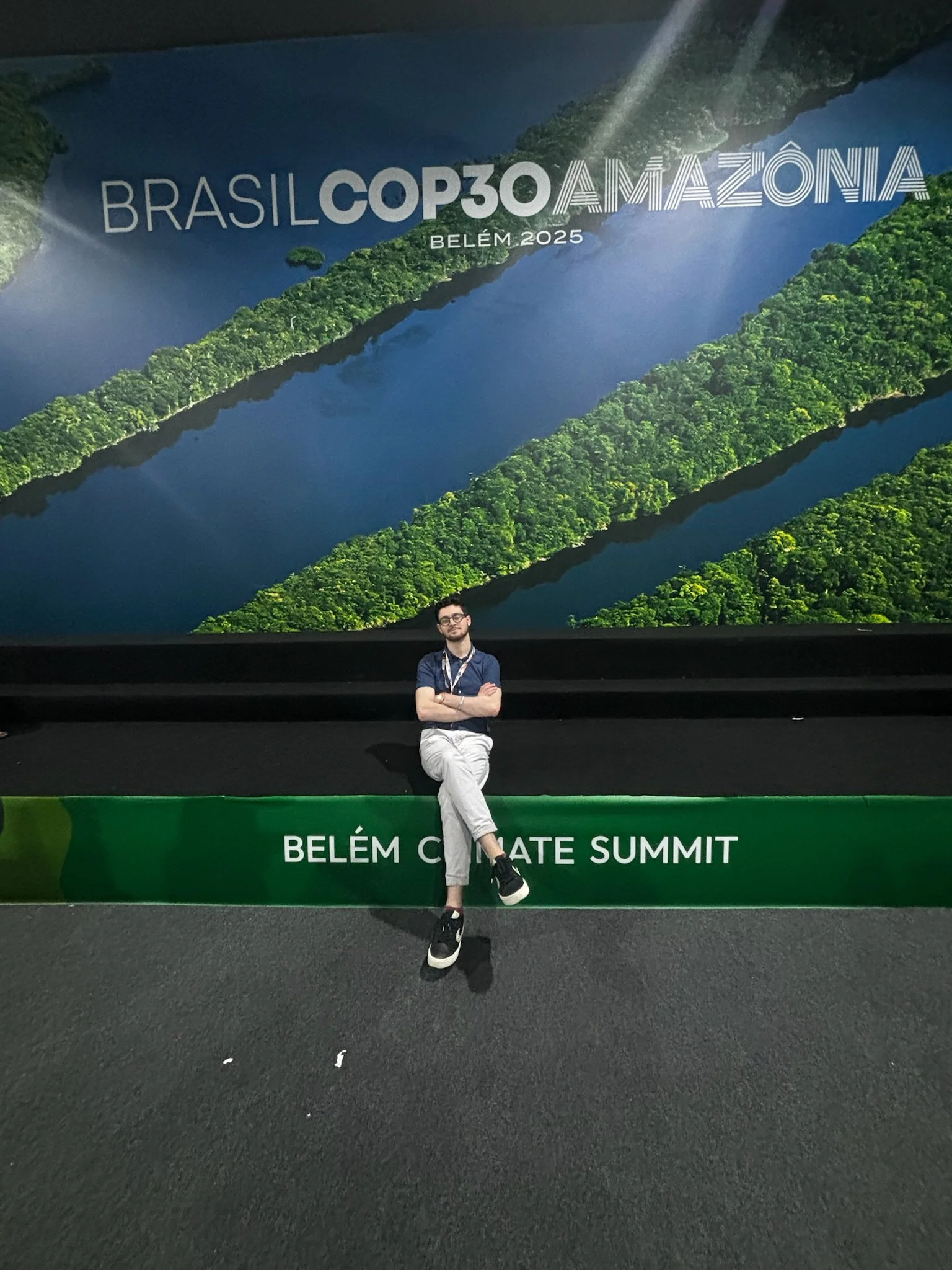
After coursework at Fletcher in climate change policy and law, international environmental law & diplomacy, and international negotiation, the UNFCCC COP30 was a valuable opportunity to bring together my curricular experiences and see how everything comes together outside of the classroom. Despite my interest in both the negotiation and non-negotiation components of the COP, my takeaways from each facet of the event are very different.
The end point of the negotiations includes both wins and losses for those wishing to increase global climate change action. The tripling of adaptation finance by 2035 is a win, but the lack of a base year in the text is a loss. The Global Goal on Adaptation’s decision to adopt indicators and disaggregations is a win, but the missing metadata and indicator description is a loss. The acknowledgment of the Global Stocktake is a win, but the reiteration of the 2°C goal, and implicit ignorance of the advisory opinion of the International Court of Justice which favours the 1.5°C goal, is a loss.
It is equally worth acknowledging what did not make it into the text: the fossil fuel and deforestation presidential roadmaps stole the headlines, but they are not alone. Negotiations regarding synergies between other multilateral environmental agreements (MEAs) progressed poorly as the proposed text was shrunk to the point of substantive insignificance. For example, text regarding the inclusion of other MEAs in National Adaptation Plans was initially included, but because of interventions given during informal consultations, I watched as the language was eventually removed. Given the comparatively advanced level of institutional development and financial resources of the UNFCCC’s regime, more ambitious language could have unlocked progress both within and outside of the climate bubble.
When taken in comparison to some of the pavilion and side events held in parallel to the negotiations, the contrast is striking. I had the privilege of attending sessions on a wide array of subjects including nature-based solutions to climate change, the role of advisory opinions, and the financing of climate action at a variety of venues such as the Ocean Pavilion, the Water Pavilion, and the Canada Pavilion. These events, while still highlighting the struggles of current multilateralism and the triple planetary crisis, were much more optimistic and were much more forward in catalyzing action. For example, at one session at the Ocean Pavilion titled “Advancing Ocean-Based Climate Solutions Through Blue Carbon Finance”, speakers from the governments of Indonesia, the United Kingdom, and Canada spoke on their collaboration in growing carbon sinks such as seagrasses and mangroves through both public and private finance initiatives. As exciting as this initiative and collaboration is, it is not enough. Despite Belém being a coastal city, oceans were not dominant on the COP agenda – crucial discussions like these need to transition from the pavilions to the negotiation rooms.
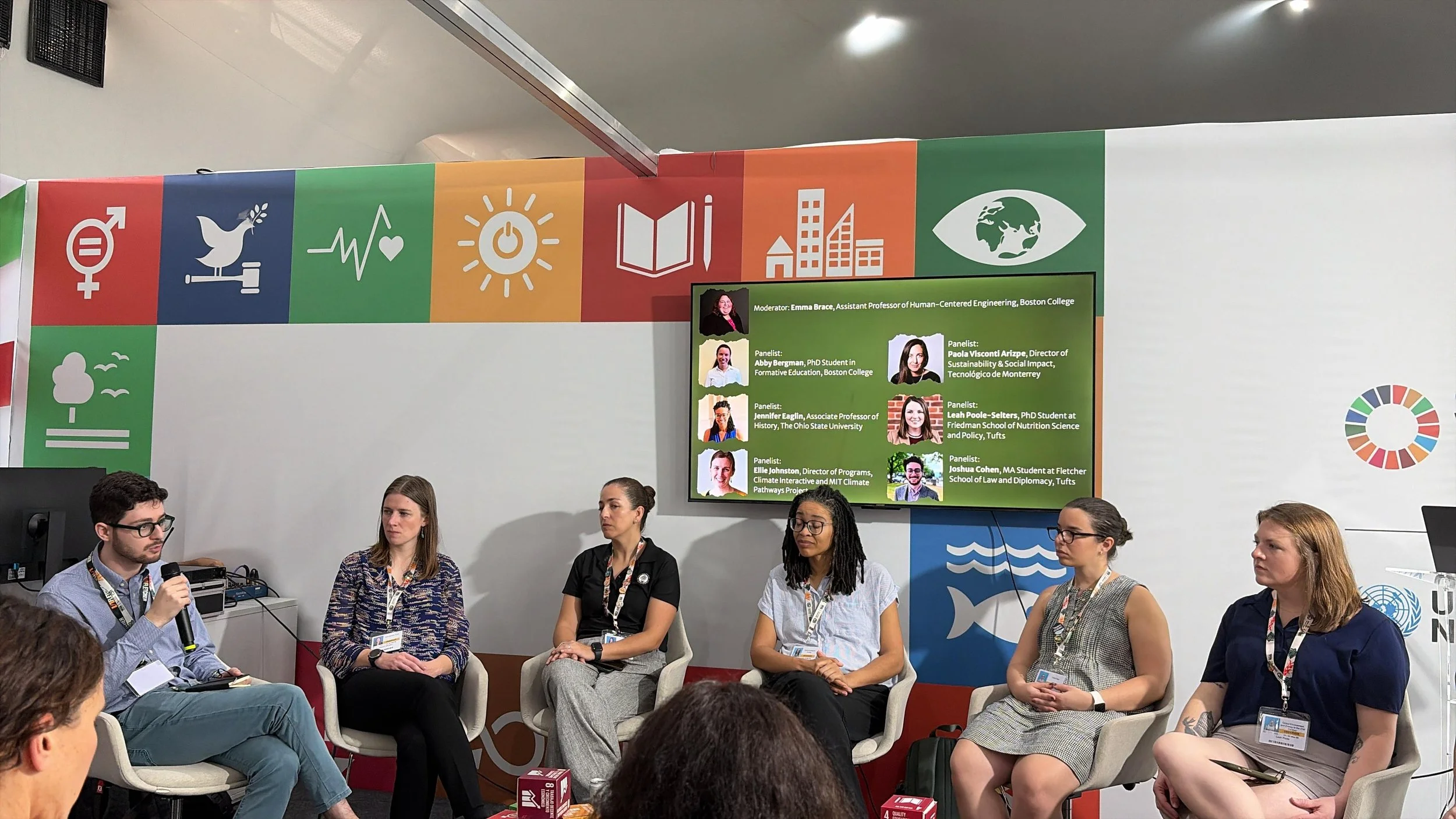
I feel grateful to have contributed to this meaningful pavilion-level dialogue through my speaking engagement as a panelist at the Sustainable Development Goals (SDG) Pavilion. To continue the discussion on SDG 4 on education, I spoke about the power of debate as a tool for climate education on the panel titled “Education for Empowerment: Shaping the Next Generation of Climate Innovators”. While it was a joy to share my passion for debate and debate education with others, it was equally exciting to learn about the breadth and diversity of different initiatives taking place at other higher education institutions across North America.
My most significant takeaway is that the most important initiatives seem to happen unilaterally. The roadmaps on phasing out fossil fuels and halting deforestation as well as the establishment of the Tropical Forests Forever Facility (TFFF) were all set in action by the Brazilian presidency without consensus. I find the TFFF particularly exciting given that its pay structure is based on forest coverage and area of forest loss which is easier to compute and monitor using spatial information than deforestation. However, there is also action taking place at the national and organizational level which I learned about at COP30 that is also important to fighting the damages accrued from the impacts of climate change independently of the negotiation fora from the inclusion of nature in the NDCs of Eswatini, Sri Lanka, and others to the IFRC/WWF partnership to mobilize funds to implement natural solutions for human security.
Attending the COP allowed me to connect my academic training at Fletcher with real-world policy dynamics and sharpened my interest in the governance challenges that shape global climate action. I look forward to implementing what I have learned in my climate-, negotiation-, and trade-related coursework in the months before I graduate. I am deeply grateful to the Center for International Environment and Resource Policy (CIERP) and the Climate Policy Lab for making this opportunity possible. This experience has meaningfully informed my capstone research, strengthened my professional trajectory, and been academically validating and fulfilling.
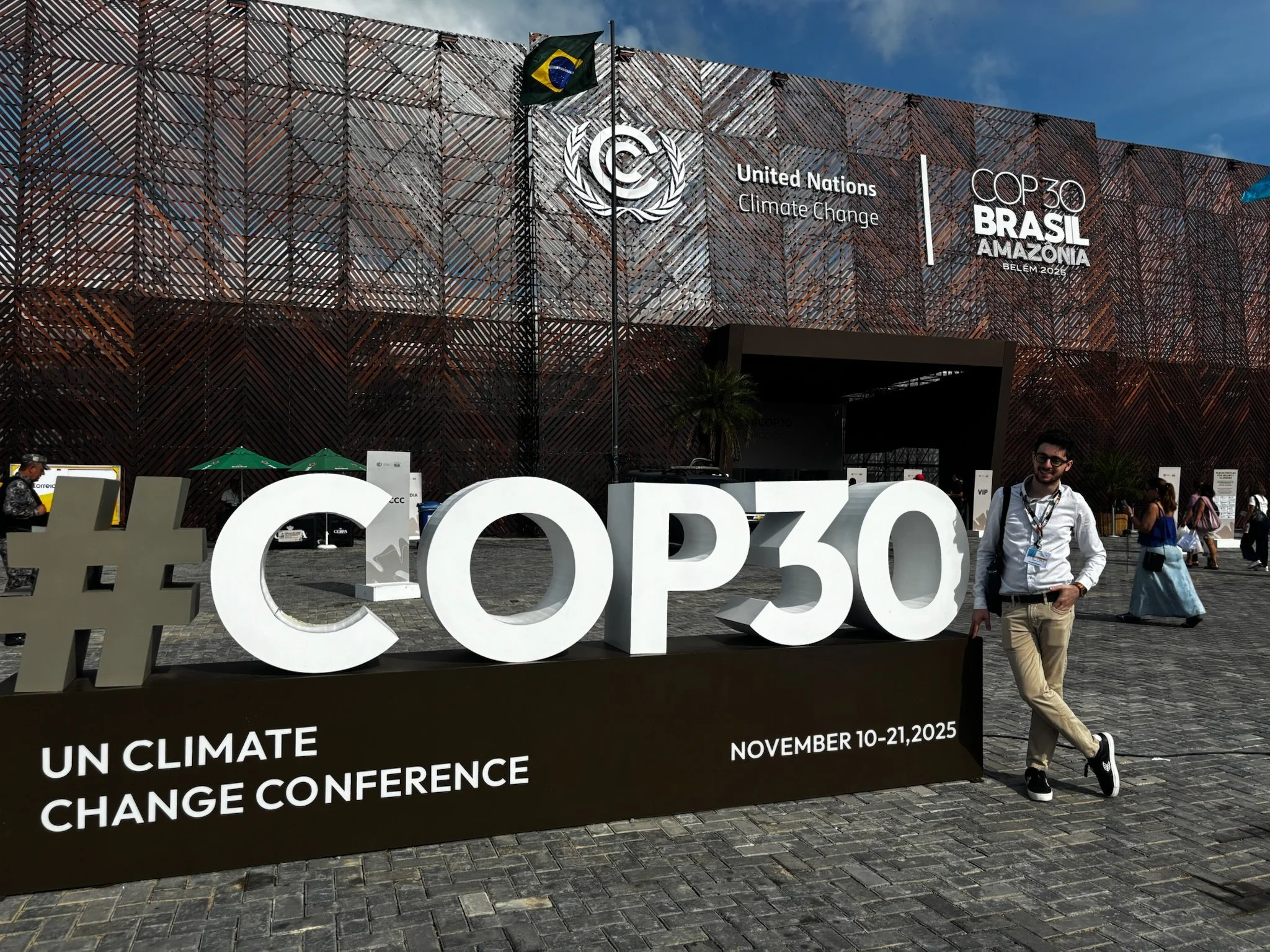
Joshua Cohen is a BA/MALD student in his final year at Tufts University. Josh is currently a research assistant at CIERP with both the Climate Policy Lab and the Shared Waters Lab. His academic interests focus on the intersection of environmental and international legal issues, especially with regards to marine and freshwater issues.