
Reflections on COP30
By Malvika Pradhan
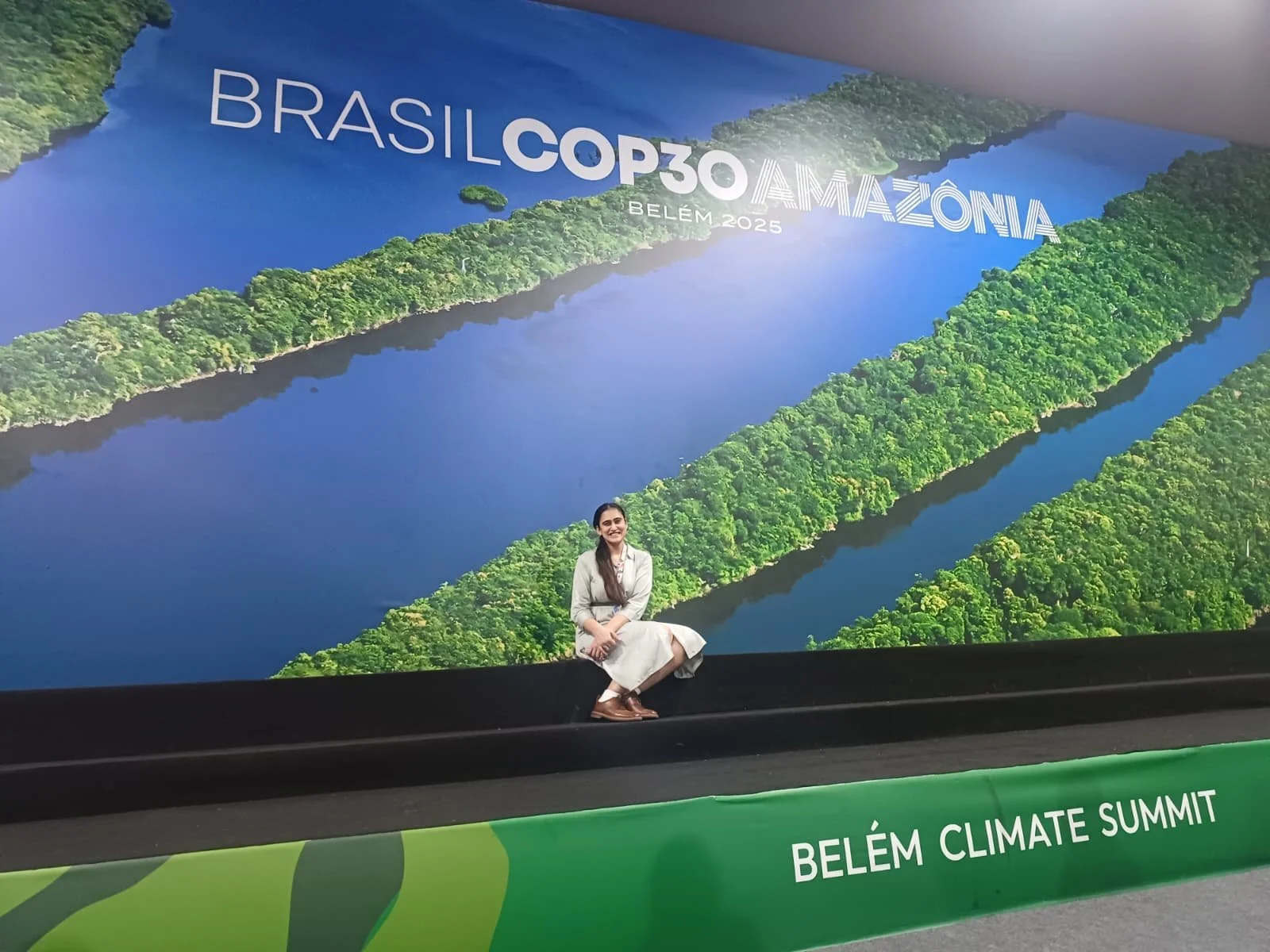
My ‘why’ to return to school has always been very clear – I wanted to gain a skillset that would help me understand how to include environmental considerations, particularly nature and biodiversity, into decision-making. In practice, I expect much of this work to sit in or alongside the private sector. Being able to attend COP30, in Belém, felt directly aligned with my academic and professional goals. This COP emphasised the connection between nature and climate change, and the setting, at the gateway to the Amazon, exemplified the importance of that connection.
The opportunity to attend COP30, therefore, was incredible! I was so deeply excited but also a bit unsure of whether I would be able to navigate a sea of experts, diplomats, people from all over the world, doing incredible things for our planet.
What grounded me quickly was being clear about why I was there and what I wanted to learn. I planned my days around pavilion sessions on themes I cared about - nature, oceans, food systems, measurement and reporting standards. My attempt at scheduling was rather overenthusiastic – my outlook calendar was color coded and thrice booked, a very realistic plan provided I could be in 3 places at once.
Attending the COP in its second week was serendipitous since it coincided with thematic focuses on my areas of interest. I was too busy to feel disoriented – my first day at the conference was the nature-themed day. There was no time to feel lost as I tried to speed walk from the Blue Zone to the Green, and back, attending all the fascinating events pavilions had organized on biodiversity.
Most of my time was spent across a small number of spaces: at Deloitte’s lush, green pavilion in the Green Zone, and in the Blue Zone at the World Wildlife Fund’s pavilion and the Standards one, as well as the Tufts–Cornell booth. While I did walk around and take in other pavilions, my focus was deliberate. Negotiations are fascinating, but they weren’t my primary interest. I was far more drawn to understanding what other stakeholders (private-sector actors, professional bodies, multilaterals, and NGOs) were actually doing on the ground.
My interest lies in the ‘how’, the actual on-ground implementation. I tried to draw on my previous professional experiences and wondered what I’d do if a client asked me to create a nature strategy for them, why they ought to even care about net zero or a nature-positive approach.
The events I attended reflected that. They ranged from discussions on transforming food systems to deliver low-emission, nature-positive nutrition at scale, to conversations about business models that aim to conserve biodiversity while remaining profitable. I also gravitated toward quieter sessions on standards and measurement - including one that was noticeably under-attended, as well as discussions on valuing nature and embedding environmental considerations into organisational decision-making. A session I particularly enjoyed was on food systems, which, despite being as critical as energy systems, are underfunded. This session focused on what concrete steps are actually being taken to get the funding required to meet our planetary and nutritional challenges.
Three themes stood out:
(1) Data, Trust, and Standards
Standardizing disclosures facilitates reliability as do trustworthy measurements. Data must be reliable and at the level of granularity one needs. While AI is a powerful tool, at the end of the day, it really is just that – a tool. What is important is its purpose – if one can achieve 96% accuracy and reliability with machine learning, does the 98% provided by AI justify the cost and effort involved? This was the question posed by the co-founder of a Dutch nature tech company that combines AI and satellite data to help organizations monitor their supply chains and prevent deforestation. This allows for targeted interventions that create a supply chain that actually accounts for biodiversity, helping reduce deforestation related emissions in measurable ways.
(2) Business Case for the Environment
Talks and conversations with people from 3 organizations in sectors as varied as beauty and cosmetics, energy technology, and mining, provided real life examples of connecting environmental considerations to measurable financial performance and sustained competitive advantage. The head of sustainability at Natura, a Brazilian cosmetics organization, spoke not only about the company’s sustainability and social initiatives but also about how they embedded these considerations into their culture to the point where both are non-negotiable. It was such a pleasure learning about this, particularly since one of the last engagements I’d worked on before coming to graduate school saw the sustainability program reluctantly put on pause due to budget considerations. Hearing Natura’s experience of how doing good has helped position them as market leaders, and create a distinct brand identity demonstrated how such a strategy could be implemented. I was very excited when I heard the sustainability head of the other 2 organizations talk in clear numbers, and business terms about the importance of green jobs and that if operations planning did not account for climate change induced risks, then the organization was planning to fail. Extreme heat, climate change and unsustainable development induced floods are a real risk to companies’ factories and their labor force. An anecdote shared by a fellow attendee on having their factory’s production lines shut for 2 months because of unseasonal flooding emphasized these risks.
(3) Finance, Trust and Language
A recurring theme is finance. Where will the money come from? How can the private sector, which emphasizes returns, get involved? As a founder said, “Money flows at the speed of trust” highlighting the connection between reliable data, reporting and funding. An ocean platform speaker talked about the importance of policymakers, companies, and scientists speaking the same language. The most common refrain was how to get companies to view nature as an investable asset class, a concept I might have found deeply depressing, even outrageous, before my environmental economics class at Fletcher, where we learnt that if we don’t put a value on something, it will, by default be assigned no value at all.
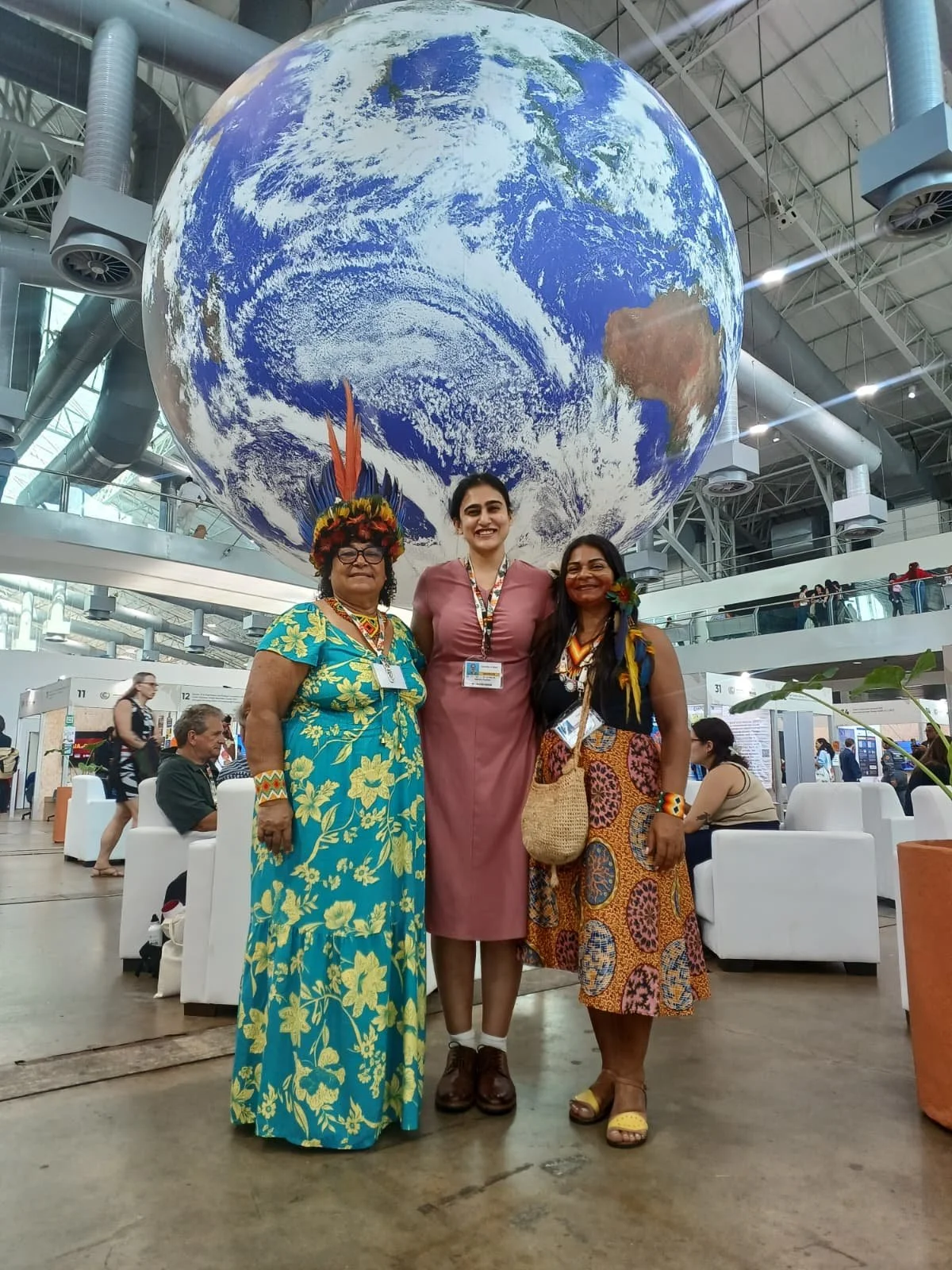
While my days appeared deeply structured, they were also full of serendipity, particularly at the Tufts/Cornell booth. People make an event and I learned so very much and had such wonderful interactions with individuals from all over the world! From 2 members of Pakistan’s automotive association who were in search of academic partners to help them decarbonize and increase their competitiveness, to members of the Uzbekistan delegation who were very happy to speak to people from both our universities, having gone to school in the area. That particular conversation led to a fascinating one on rice farming, discussions on a grant received by multiple central Asian countries to help improve their agricultural productivity which in turn led to a conversation on climate-friendly, water-efficient paddy growing. Speaking to the warm and helpful volunteers opened my eyes a little bit to the parts of Belem I as a very temporary visitor would otherwise not have hoped to learn, a pity since it is such a lovely, lush green city. My most memorable conversation was conducted entirely with Google Translate, smiles and nods, with 2 Indigenous ladies who spoke about their experience at the negotiations and their hopes for more Indigenous participation.
Attending this conference has been a very enriching part of my academic journey so far. It helped clarify the skillsets I need to continue building and sharpened my sense of where I want to focus the remainder of my degree. I came away with a clearer plan for the second half of my programme, including two independent studies I am currently developing. More than anything, the experience underscored the importance of the unglamorous work - changes in accounting and reporting, credible data, and the quiet discipline of implementation - that will ultimately determine whether our net zero and nature-positive ambitions succeed.
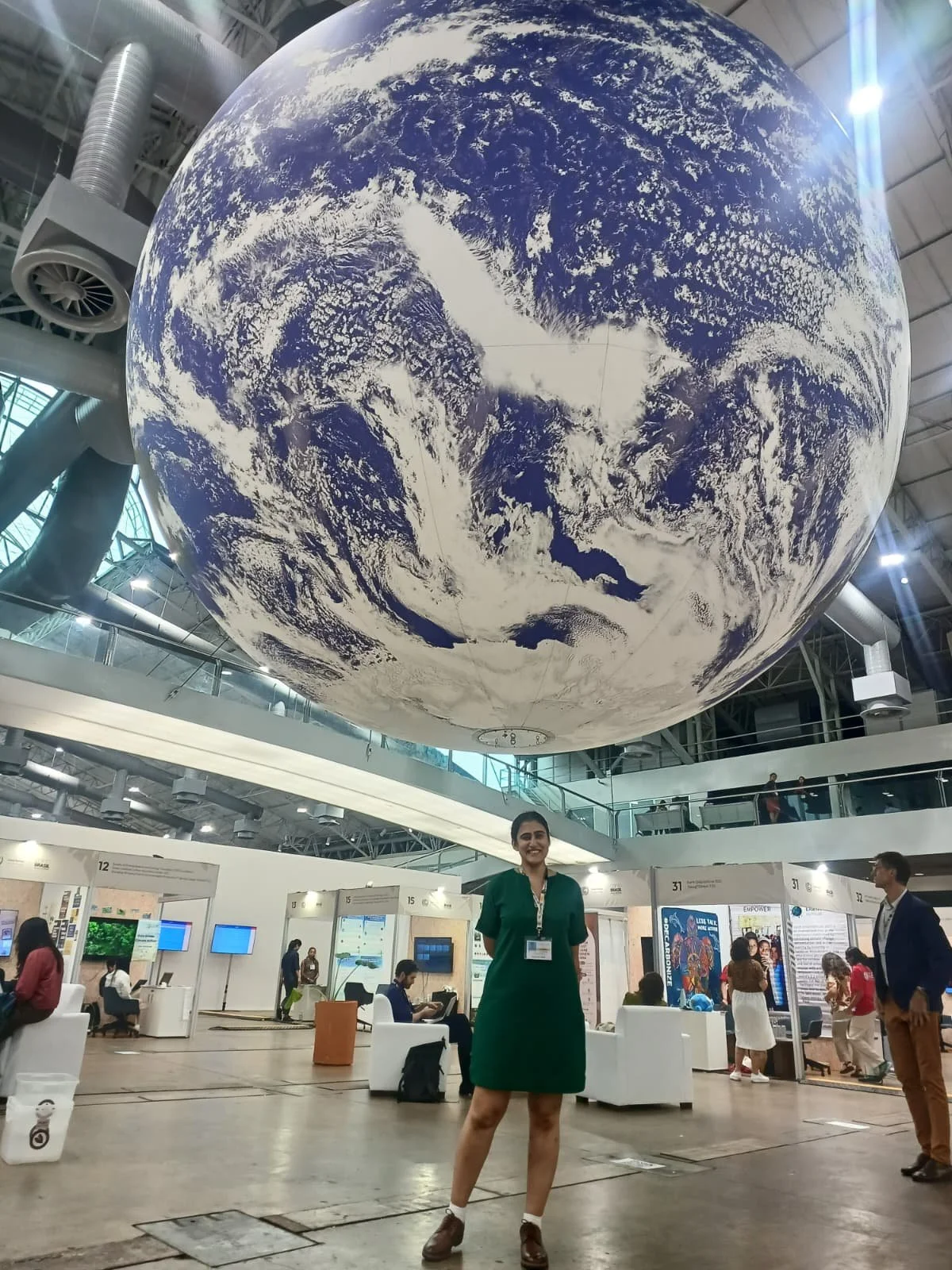
Malvika Pradhan is a MALD candidate at The Fletcher School of Law and Diplomacy, where she focuses on integrating biodiversity and environmental considerations into decision-making through valuation, reporting, and risk frameworks. Her interests lie at the intersection of nature, equitable economic development and the private sector, with an emphasis on practical implementation.