
When Spring Comes Early: Climate Change and the Shifting Natural Rhythms of Nowruz

This blog is a part of our 2025-2026 Climate and Cultural Heritage Series made possible by the Fletcher Center for International Environment and Resource Policy and the Fletcher Office for Inclusive Excellence.
By: Aiganym Nurakhanova
Nowruz, meaning new day in Persian, is a springtime festival with origins extending over three millennia to the Zoroastrian tradition in ancient Persia (present-day Iran). It marks the first day of the Persian solar calendar and coincides with the spring equinox, typically around the 20th of March, when the sun crosses the celestial equator and day and night are nearly equal. This moment of seasonal balance has long symbolized renewal, fertility and harmony with nature, which lie at the core of the celebration. As one of the world’s oldest continuously observed holidays, Nowruz has been passed down across generations and remains widely celebrated today by over 300 million people across Iran, Central Asia, the Caucasus, the Middle East, the Balkans and beyond.
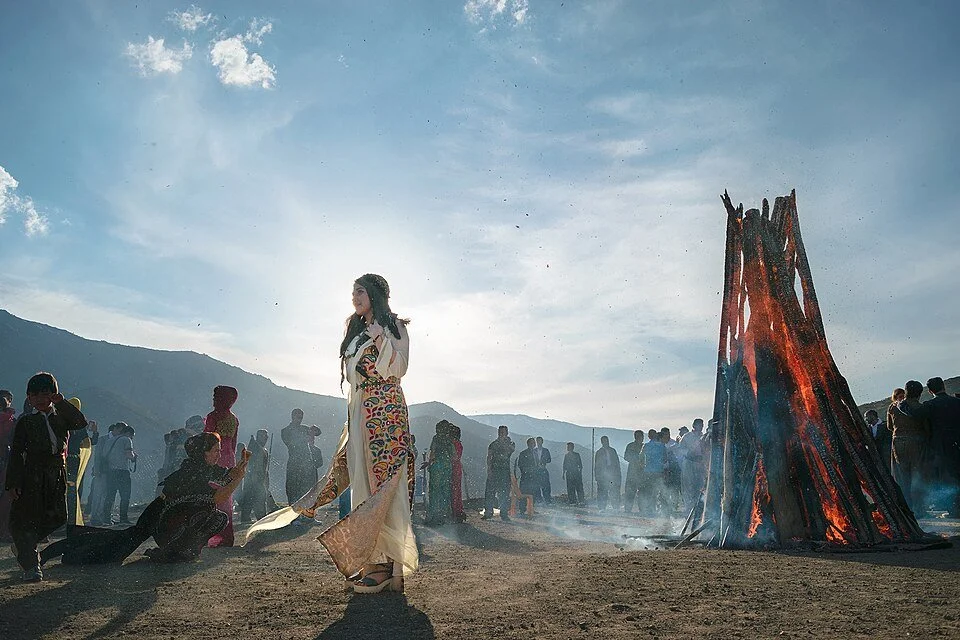
Photo from Wikimedia Commons
Although it is guided by astronomical precision, Nowruz has never functioned as a purely calendrical marker. Its cultural significance has long depended on the assumption that the arrival of the spring equinox corresponds with observable environmental change, including warming temperatures, the emergence of blossoms, as well as the renewal of agricultural and ecological activity. For centuries, these natural indicators have reinforced the symbolic meaning of the holiday, thus grounding abstract notions of balance and rebirth in lived environmental experience. Consequently, Nowruz has historically reflected a close alignment between cultural timekeeping and stable ecological rhythms.
Nevertheless, in recent years, this environmental connection has become an increasing source of concern among Nowruz celebrants as climate change has been altering the conditions that once reliably accompanied the arrival of spring. These concerns are particularly acute in Iran, where the holiday originated, and where climate pressures have intensified rapidly. Rising temperatures, growing water scarcity and the depletion of natural species are reshaping seasonal cues across much of the region. As Persis Karim, director of the Center for Iranian Diaspora Studies at San Francisco State University, noted in a 2024 BBC interview, these changes have rendered Nowruz vulnerable in new ways, linking the celebration to broader awareness of environmental fragility and human responsibility within it. This perspective underscores the extent to which the holiday’s meaning remains deeply tied to ecological stability, even when that stability becomes increasingly uncertain.
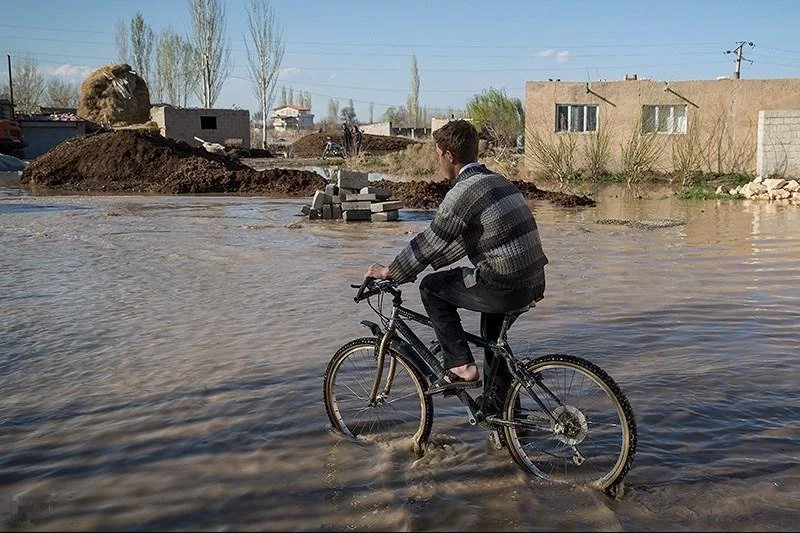
Photo from Wikimedia Commons
In March 2024, the Migration Policy Institute explored the broader environmental context underlying these concerns in Iran. The report documented how prolonged droughts, extreme heat, flooding and chronic water scarcity have increasingly disrupted livelihoods across the country, thereby contributing to widespread internal displacement and social strain. According to government figures cited in the analysis, approximately 800,000 Iranians have been internally displaced due to climate-related factors, while tens of thousands more are forced to relocate annually because of environmental disasters. With nearly 85% of Iran classified as arid or semi-arid, water scarcity has emerged as a structural condition, rather than a temporary deviation from historical norms.
At the same time, perhaps partly in response to these challenges, Nowruz has gained momentum in receiving international recognition. In 2009, it was inscribed on UNESCO’s Representative List of the Intangible Cultural Heritage of Humanity, which affirmed its cultural significance and role in transmitting values and indigenous knowledge across generations. Yet this milestone emphasizes the central tension facing the celebration today: while Nowruz continues to be preserved and promoted globally, the environmental conditions that historically gave its rituals tangible seasonal meaning are undergoing profound change.
Across the globe, the rituals and symbolism of Nowruz have remained largely unchanged, thus demonstrating the resilience of cultural tradition and its capacity to endure amid environmental stress. Nonetheless, subtle adaptations are increasingly evident. In some settings, certain traditional foods are purchased in stores instead of being made at home due to constraints related to water scarcity, urban living and shifting seasonal conditions. For instance, pistachios used in ajil (a traditional Persian nut mix served to symbolize abundance and hospitality in the new year) now face an uncertain future in Iran, where severe water shortages and over-extraction are undermining the sustainability of their production. In Kazakhstan, outdoor celebrations of the holiday that once relied on predictable spring weather are more frequently adjusted in response to cold spells across the country. These changes are rarely framed explicitly as responses to climate change, yet they signal a quiet recalibration of cultural practice in the face of environmental uncertainty.
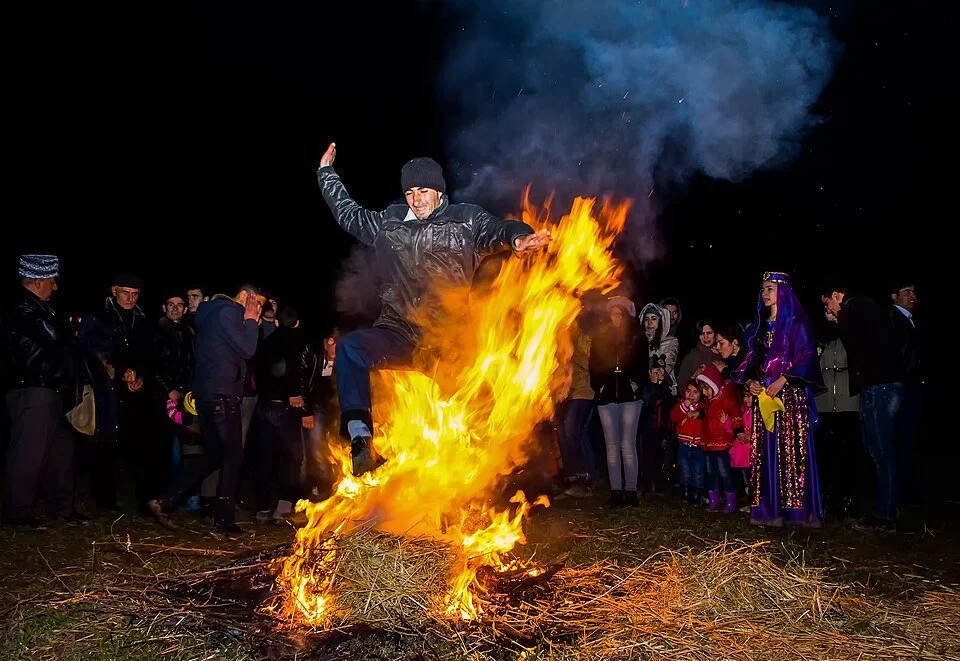


Photo from Wikimedia Commons

More importantly, these incremental adjustments highlight a critical dynamic in climate adaptation: cultural systems often respond gradually and informally long before environmental change is acknowledged through public policy or governance frameworks. In the case of Nowruz, symbolic continuity masks emerging material strain, which allows the celebration to persist even as the ecological assumptions underpinning it become less reliable. This tension raises questions about how long traditions grounded in seasonal regularity can remain unchanged when the natural systems they reflect are increasingly unstable.
Continued warming is likely to further weaken the alignment between ecological processes and cultural calendars. Earlier blooming, prolonged drought, and heightened weather volatility may deepen the disconnect between the fixed date of the spring equinox and the experiential arrival of spring. Under these conditions, the seasonal symbolism of Nowruz risks becoming increasingly abstract and sustained through ritual memory, instead of being reinforced by environmental observation. While this does not suggest the disappearance of the holiday, it points to a transformation in how renewal and balance are understood through a shift from lived ecological experience toward symbolic affirmation amid disruption.
Nowruz offers a compelling case study of how climate change reshapes human-environment relationships beyond economic or infrastructural impacts. Rooted in ecological rhythms and sustained through centuries of relative environmental predictability, the celebration illustrates how cultural meaning has long depended on stable natural cycles. Today, while Nowruz continues to be preserved and promoted globally, its symbolism no longer feels entirely rooted in the predictable environmental change associated with the arrival of spring. This tension underscores a broader policy-relevant insight: cultural resilience alone cannot compensate for ecological instability. Therefore, addressing climate change is not only a matter of safeguarding ecosystems and livelihoods, but also of preserving the environmental foundations upon which cultural timekeeping and collective meaning have historically rested.
Aiganym Nurakhanova is a first-year Master of Arts in Law and Diplomacy: International and Development Economics (MALD:IDE) track student at The Fletcher School, where she concentrates on International Development, Environmental Policy, and International Legal Studies. She brings in several years of experience across social impact, policy research, due diligence, and sustainability assurance and consulting sectors. Her interests lie at the intersection of ESG disclosure oversight, energy transition, and climate justice advocacy.