
Climate Policy Lab at 10: Raising Climate and Growth Ambitions in a Fragmenting World
On September 28, 2026, the Climate Policy Lab (CPL) marked its tenth anniversary with its second annual symposium, “Raising Climate and Growth Ambitions in a Fragmenting World.” Tariffs, carbon border adjustments, the race for critical minerals, and renewed concerns over energy security have pushed governments to treat climate policy as part of their industrial and trade strategies. The question running through the symposium was how countries, particularly in the Global South, can raise their climate ambitions while securing growth in an increasingly fragmented world economy.
The day began with a morning expert convening on how emerging economies can navigate a shifting global trade and economic landscape. Participants started from the observation that the economic opportunity of the green transition is substantial but concentrated, with emerging economies receiving only a small share of global clean-energy investment and manufacturing. Much of the discussion then centered on how these countries can find their own entry points in clean-energy supply chains, drawing on China’s experience with implementation, long-term planning, and patient capital. Participants also stressed two conditions for doing so. The first is the planning, modeling, and market intelligence needed to choose where to enter. The second is policies durable enough to survive changes in government, with benefits that the private sector and local communities would be willing to defend.
Opening Remarks – Climate Policy Lab at 10
Dean Kelly Sims Gallagher, founder and co-director of CPL, opened the symposium by looking back on the Lab’s first decade and sharing highlights from the Lab’s 10-year report. CPL was launched at the UN climate negotiations in Marrakech in November 2016. In the run-up to the Paris Agreement, it had become clear that many governments lacked clarity about the scope of their possible climate commitments and, when faced with uncertainty, tended to adopt less ambitious positions. Since then, the Lab has worked intensively around the world, including in Brazil, China, India, Indonesia, Mexico, South Africa, and the United States, looking to build a trustworthy, empirically grounded, body of work that is applied to real world challenges. It has also mentored 31 pre- and postdoctoral fellows and visiting scholars from 13 countries.
Drawing on this decade of work, Dean Gallagher distilled four lessons. 1) Climate policy succeeds when it advances broader goals such as economic growth and energy security. 2) Governments should look for the opportunities that arise from the climate challenge aiming at creating consensus around economic and climate benefits. 3) Effective implementation depends on people, institutions, and tools, without which the most ambitious goals cannot be fulfilled. 4) Finally, adaptation and resilience go hand in hand with development and mitigation.
Her remarks focused mostly on the second lesson, as the lack of focus on economic opportunity has caused climate progress to stall. In the United States, framing climate policy mainly in environmental terms left it politically exposed, as the rollback of many of the Inflation Reduction Act’s provisions has shown. Yet some of the largest gains in renewables have come from Republican-leaning states such as Texas and Iowa, where wind and solar have flourished for economic reasons. China, for its part, named green industries as strategic emerging industries as early as 2010, and its clean economy is now larger than its fossil fuel economy. As one Indian policymaker who has worked with the Lab put it, net zero can be net positive.
Panel 1 – National Policy Responses to Shifting Global Climate and Trade Politics
Moderated by Jennifer Morgan, former Special Envoy for International Climate Action at Germany’s Federal Foreign Office and Senior Fellow at CPL, the first panel examined how recent shifts in global climate and trade politics have affected national plans in South Africa and Brazil. Professor Anthony Black of the University of Cape Town described critical minerals as a potential source of industrialization for African countries, but cautioned that Africa has exported raw materials for centuries and must ask what will be different this time. In his view, closer regional integration would make a substantial difference. Echoing Black, Pedro Tiê, Head of the Renewable Energy Division at Brazil’s Ministry of Foreign Affairs, stressed that Brazil wants local value addition across the supply chain. He sees the newly approved National Policy on Critical and Strategic Minerals (PNMCE) as an important step, given the relentless interest of foreign companies in the country’s mineral resources.
On carbon border measures such as the EU’s CBAM, Tiê called for technological neutrality and full lifecycle assessment, noting that the value of Brazil’s biofuels is not reflected in carbon border adjustments. Black acknowledged the justice concerns the mechanism raises, but argued that South Africa also needs to decarbonize as rapidly as possible. Audience questions then brought the discussion back to politics. Tiê stressed the need for strong institutions, since it is far easier to repeal policies than to build them, while Black argued that governments must make the gains of their policies visible. Drawing on the German experience, Morgan added that benefit sharing made it politically unwise for successive governments to reverse the country’s renewables policy. Asked by Dean Gallagher how the return of energy insecurity is shaping their countries’ approaches, all three panelists agreed that it has accelerated the transition, with global instabilities increasing the speed of the transition despite recent barriers to trade.
Panel 2 – Building Green Prosperity: Production, Trade, and Shared Climate Ambition
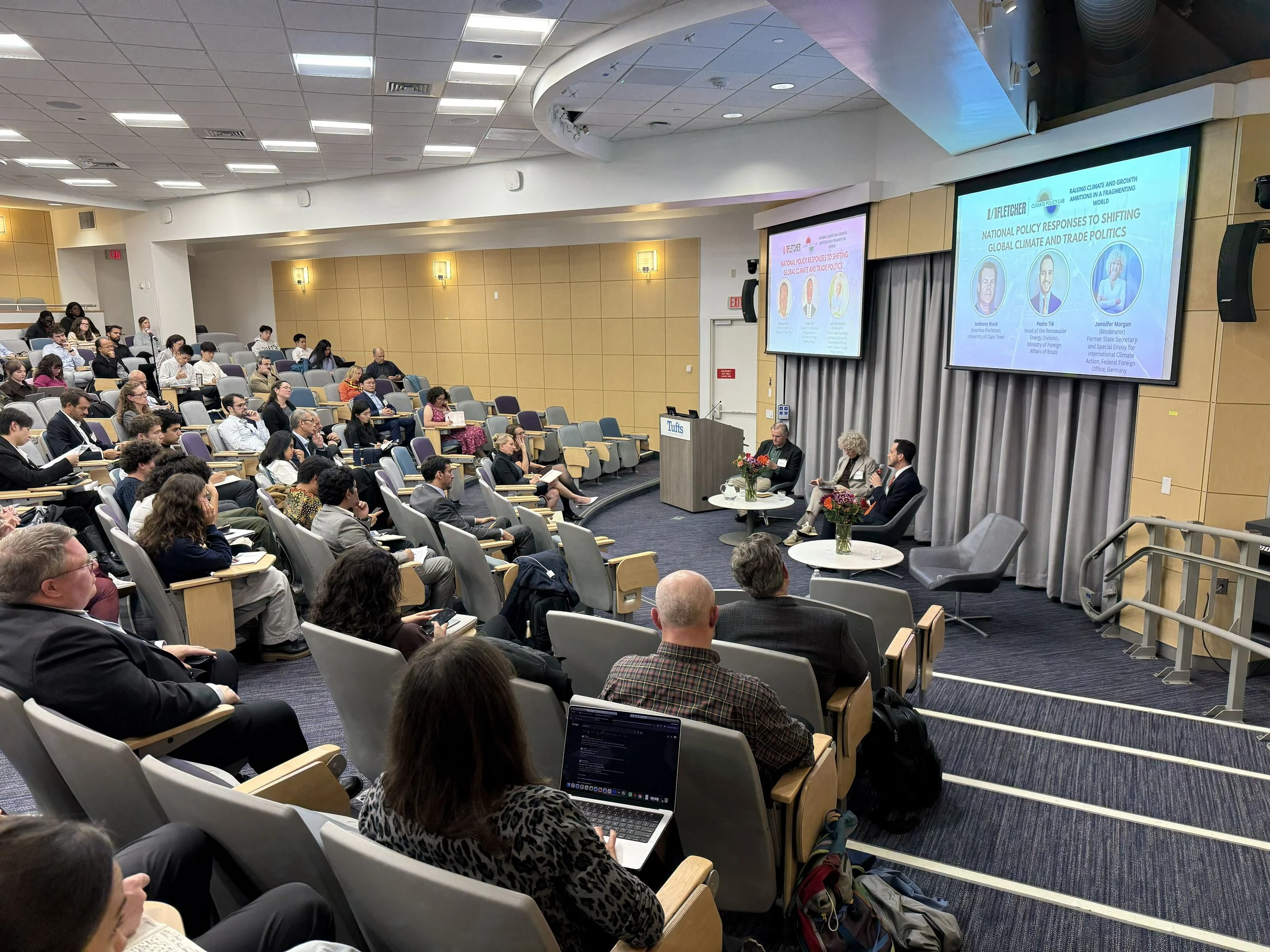
The Symposium’s second panel in Fletcher’s ASEAN Auditorium
The second panel, moderated by Professor Easwaran Narassimhan, Assistant Professor of Climate and Energy Policy at Fletcher and Co-Director of CPL, brought together Dean Gallagher, Professor Kathy Hochstetler of the London School of Economics and Political Science, and Michael Mehling, Deputy Director of the MIT Center for Energy and Environmental Policy Research. The discussion started from China’s rise in clean-technology manufacturing, built on technology acquisition, a large domestic market, and long-term planning, a combination that most developing economies will find difficult to replicate. The panel therefore made the case for a more gradual path of upgrading, in which countries identify where moving one or two steps up each value chain is feasible. Brazil’s wind industry served as an example, with development-bank financing tied to progressively rising local-content requirements.
Picking up Black’s point on regional integration, the panelists discussed arrangements such as the African Continental Free Trade Area, ASEAN, and Mercosur as ways to overcome small domestic markets. They also called for more realism about the promise of green jobs, noting that in South Africa, renewable energy jobs did not arrive quickly enough to absorb coal workers. The panel closed by defending international cooperation despite its weaknesses, since the Paris framework remains an important mechanism for accountability.
Climate Policy Lab Academy
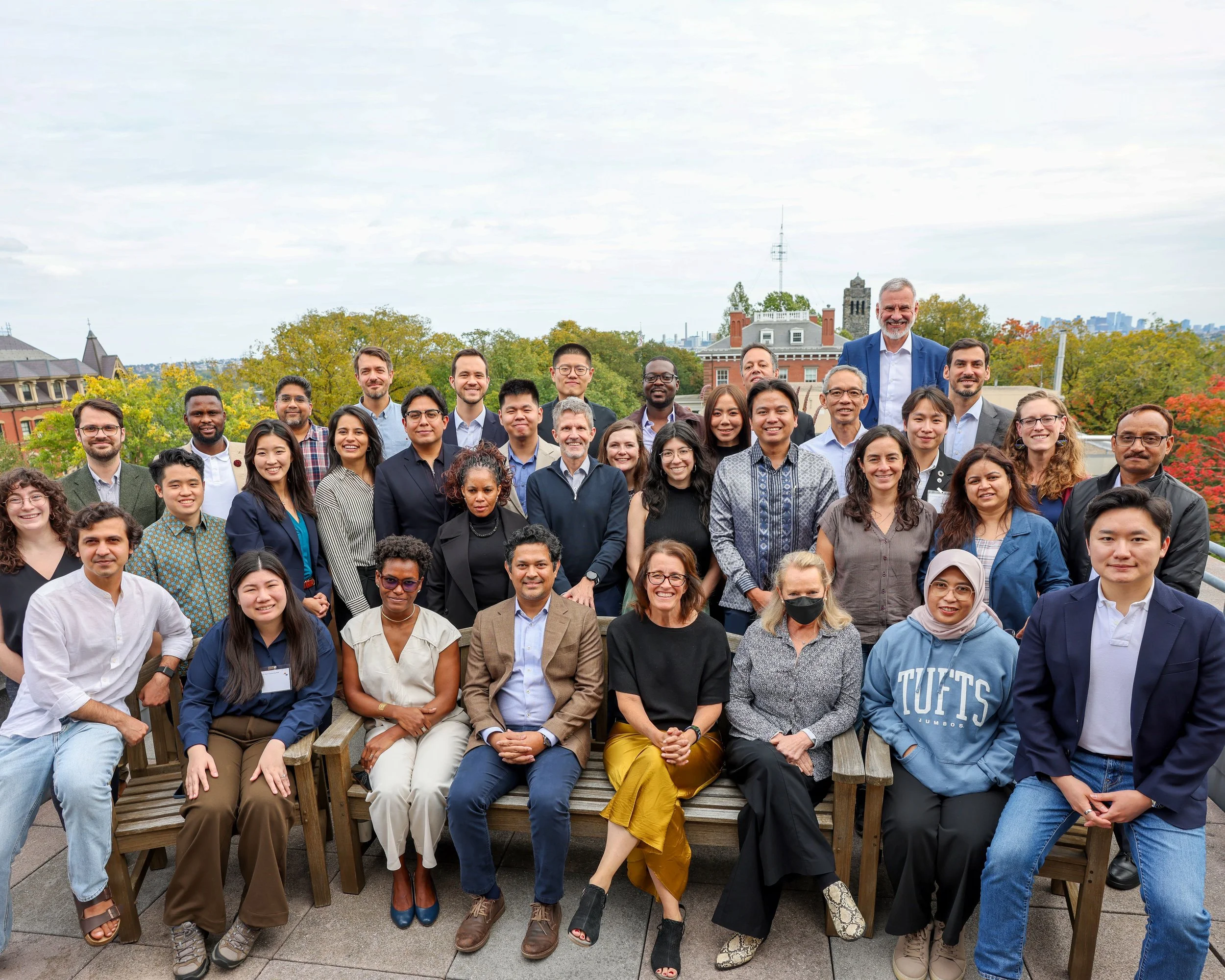
Climate Policy Lab Academy participants
The Symposium also marked the launch of the 2026 Climate Policy Lab Academy, which continued over three days at The Fletcher School. Now in its fifth year, this executive training offers the opportunity for knowledge sharing among researchers and policy practitioners from emerging market economies. This year’s cohort brought together 26 participants from Brazil, China, India, Indonesia, Mexico, Morocco, South Africa, Thailand, and Türkiye. Participants came from government ministries and agencies, a central bank, think tanks, universities, and the private sector. Led by CPL faculty and fellows, the sessions covered policy sequencing, climate policy integration and implementation gaps, green industrialization strategies, trade and climate, a case study on the global electric vehicle industry, adaptation and resilience for development, and the road to COP31. The Academy closed with group presentations and participants’ reflections on next steps for their own work and how to make progress in their home countries.
Conclusion
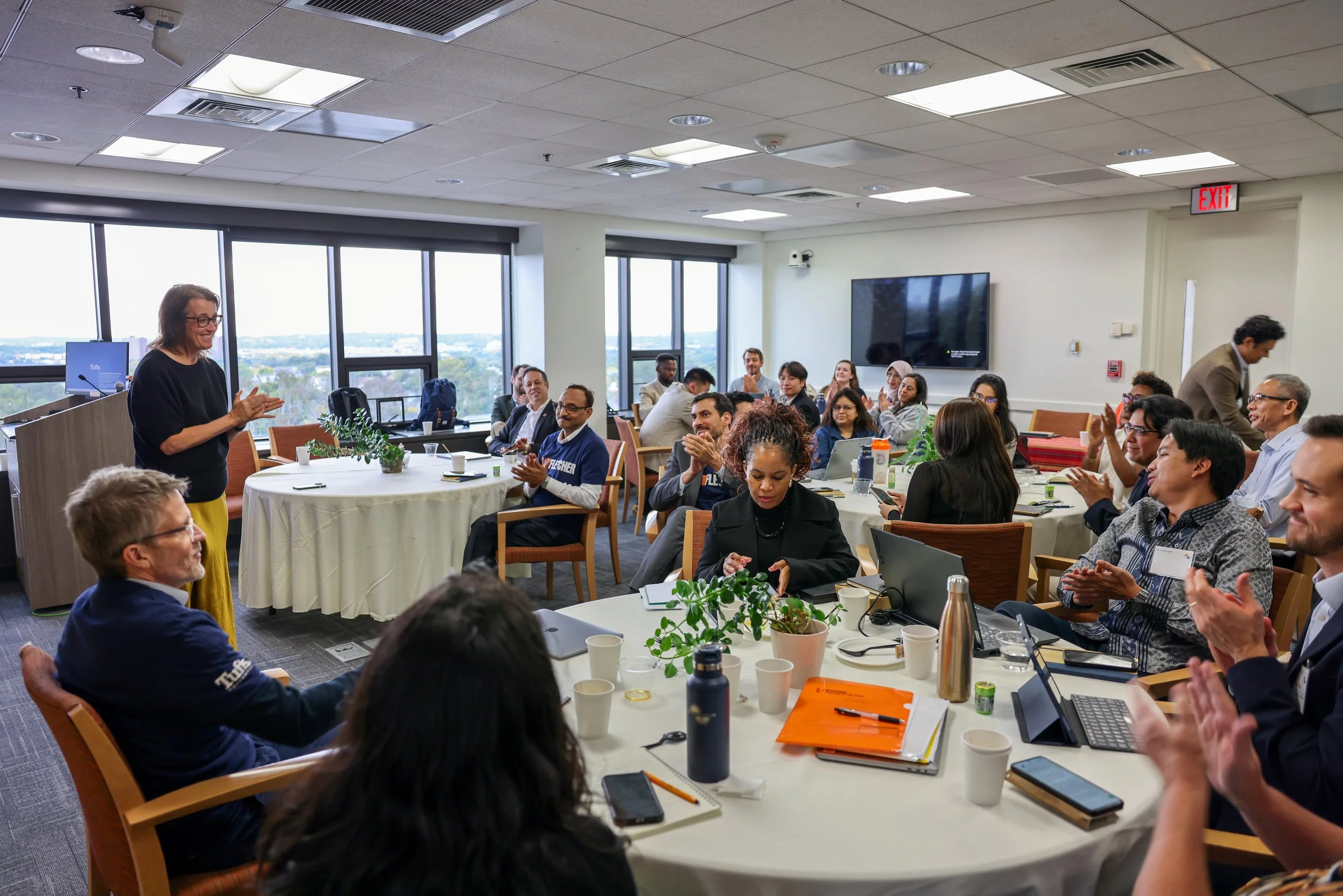
Academy participants workshopping policy
Across the expert convening, the two symposium panels and the Academy, the discussions had a common thread. Countries are deciding where to position themselves in clean-energy supply chains under pressure from tariffs, carbon border measures, and competition from established producers, and there is no single path for doing so. What works will depend on domestic capabilities, competitive advantage, and on the regional and international partnerships each country can build. Raising ambition is an important step, but following through will depend on policy design, implementation capacity, and alignment and coordination among multiple policy initiatives. In this sense, whether governments can sustain their policies long enough for the gains to become visible, and for those who benefit to defend them, is another crucial uncertainty. As the Lab enters its second decade and COP31 approaches in Türkiye, the politics of making these policies last deserves as much attention as the ambition behind them.
Renato H. de Gaspi is a Postdoctoral Scholar at the Climate Policy Lab, The Fletcher School, Tufts University. His research focuses on comparative and international political economy, industrial policy and the green transition in Latin America.