
Renato H. de Gaspi: The Politics of Green Growth in Latin America
By Pamela Lava Moreno
Communications Research Assistant, Center for International Environment and Resource Policy (CIERP) and Climate Policy Lab (CPL) | The Fletcher School of Law and Diplomacy, Tufts University
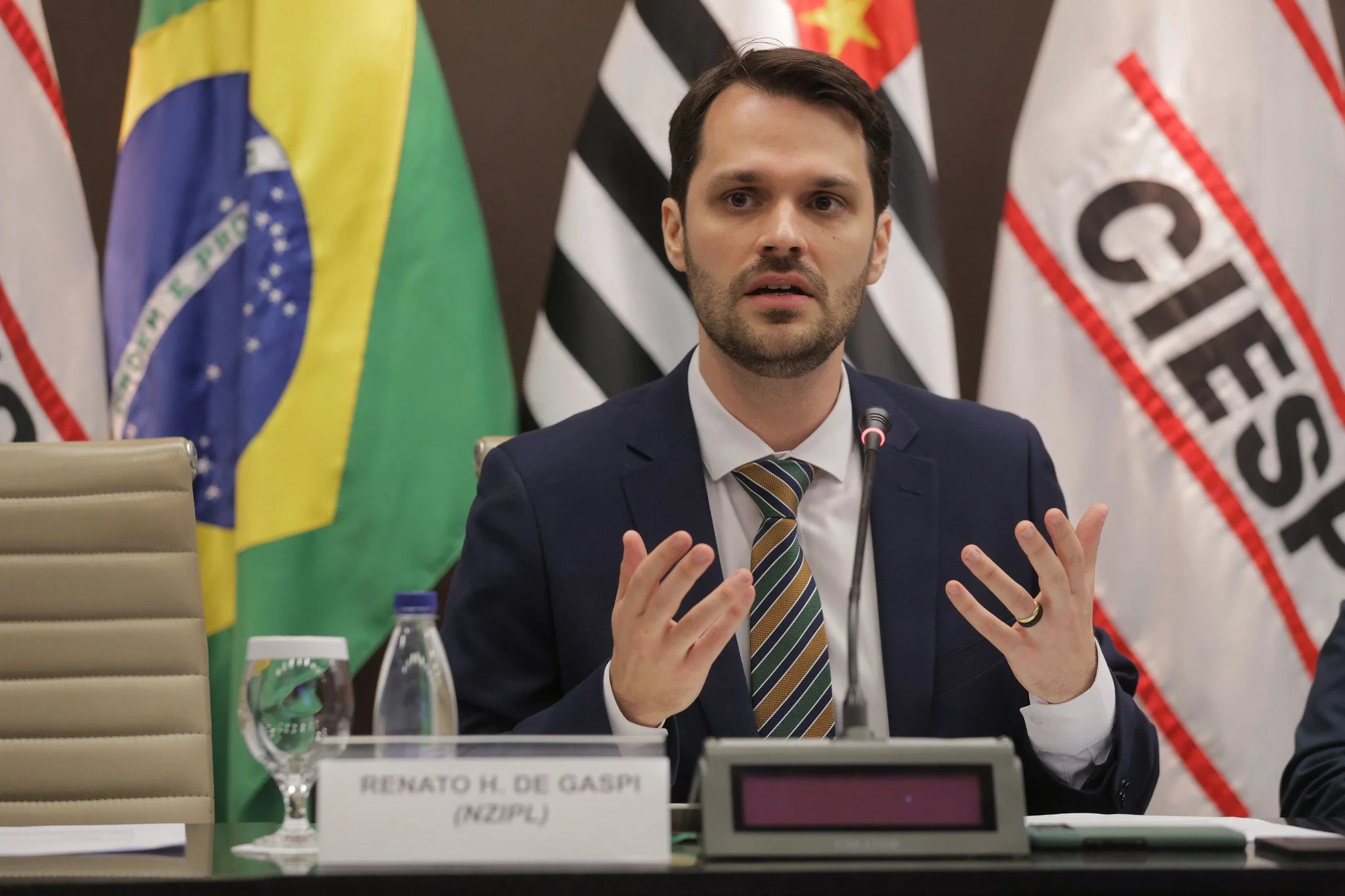
How can a country turn the opportunities of green industries into a new path for economic development? For Renato H. de Gaspi, a Postdoctoral scholar at the Climate Policy Lab, the answer relies not only on developing technologies or climate policy, but also on the political and economic interests that shape how countries grow. Renato studies the political economy of development strategies in Latin America, examining how the global shift toward cleaner energy and tech is reshaping industrial policy in developing democracies. His research explores why some industries, and political actors support the green transition while others resist it, even when the economic opportunities appear promising.
Renato's interest in political economy and development began in Brazil, where his undergraduate studies and the professors he encountered sparked his intrigue. He invested his time in understanding industrial policy and the distinct ways that governments shape their economies. His experiences studying and living in China further informed his thinking about development. Comparing China with Brazil raised questions about how different political systems influence industrial strategies and economic transition. These experiences helped shape his interest in understanding how development strategies operate across different political contexts. During his PhD in Political Science at Central European University in Vienna, his research interests evolved toward the politics of the green transition. Rather than treating climate policy as a separate issue, he became interested in how the transition intersects with countries’ existing growth models, industrial priorities, and political institutions.
His work now examines these dynamics across Latin America, a region whose economies have long depended on sectors such as agriculture, mining, and other commodity-based industries. Understanding how these established economic interests respond to the green transition is central to understanding the region’s development prospects.
Why is the Green Transition a Political Challenge?
The green transition is about more than replacing carbon-intensive tech with cleaner alternatives. It also involves changing the economic structures and political relationships that have shaped countries for decades. In Brazil, Argentina, and Chile, industries and commodity exports play important roles in economic development. These sectors also create powerful interests that may have much to lose from changes in production, investment, and government policy.
Moving toward greener industries can therefore create both opportunities and tensions. Governments may want to encourage new technologies and cleaner production, but they must also keep in mind the interest of existing industries, workers, and political actors. This is one reason Renato finds Latin America particularly important to understanding the green transition. The region provides an opportunity to examine how developing democracies navigate competing economic and political priorities. Brazil has the capacity to develop green hydrogen, biofuels, electric vehicles, and other industries associated with a lower-carbon economy. Yet its natural resources and industrial capacity do not guarantee that these opportunities will translate into a successful transition. Political organization, competing economic interest, and changing government priorities can all influence which industries receive support and how quickly new strategies advance. For Renato, understanding these political dynamics is essential to explaining why the green transition can be difficult even when its economic benefits seem clear.
Renato’s research examines how the politics of the green transition vary across industries, including electric vehicles (EVs), batteries, and biofuels. Each sector presents a different set of opportunities and challenges, demonstrating why there is no single political or economic pathway toward greener development. The battery industry, for example, connects mineral extraction with manufacturing and technological development. Building a domestic battery industry involves more than having access to the minerals needed for production. Governments must also consider how to develop processing and manufacturing capacity, attract investment, and establish policies that encourage more of the value chain to remain within the country.
The politics of the green transition raise important questions about environmental protection and the communities affected by expanding resource extraction. Growing demand for critical minerals used in clean energy technologies has intensified tensions around land use, environmental degradation, and indigenous rights. These challenges are particularly significant in Brazil, given its indigenous land protections and ecologically diverse biomes. As Renato emphasizes, green industrial policy must balance the economic opportunities of clean technologies with the need to protect the territories, rights, and livelihoods of affected communities.
Teaching and Current Research
Renato teaches Political Economy of Latin America at Boston University’s Pardee School of Global Studies, a role he has held since 2024. Teaching is an important part of who he is and why he pursued an academic career in the first place. Preparing and teaching the course has encouraged him to organize his ideas, reflect on the theoretical foundations of his research, and consider how to explain complex political and economic dynamics to students who may be unfamiliar with the region. Classroom discussion also offers opportunities to see how students interpret the same readings through different lenses. Renato’s sees research and teaching as complementary, with both offering opportunities to question assumptions and reconsider how we understand the world.
Renato joined the climate policy lab in summer 2024 after participating in several CPL events and becoming familiar with its fellows. He was drawn to the opportunity to collaborate with researchers working on related questions and particularly values the lab’s cooperative environment, where fellows exchange ideas and support one another’s work. He also appreciates the model of a research lab situated within a university, which offers opportunities to connect academic research with broader policy discussions.
Alongside his teaching, Renato is developing a paper examining Brazil's growth model. He’s particularly interested in understanding why opposition to climate policy persists, even when the transition presents significant economic opportunities. Through his work at CPL, he continues to investigate the political conditions that shape the direction of green industrial development across Latin America.
Looking Ahead and Advice
For Fletcher students interested in climate policy, development and Latin America, Renato’s first piece of advice is to resist treating the region as a single story. Its countries face different constraints, are governed by different coalitions and have responded to the same global shifts in very different ways and understanding why is often where the most interesting questions begin. He also encourages students to spend time in the countries they study. Fieldwork, he says, shows how policy is actually made and contested, something that documents and datasets rarely capture. For students heading into policy careers, he stresses that good policy is never only technical. It depends on understanding the political interests behind it and on the relationships built with the people who make and implement it, something he learned from his own policy work. For those pursuing research, building a solid theoretical foundation is essential, since it is what allows researchers to ask sharper questions and make sense of political and economic processes that rarely fit neat explanations. Whatever path students choose, his broader advice is that consistency matters more than intensity. A sustainable routine produces better work over the years than long stretches of overwork that end in burnout.