
Witnessing Climate Action in the Amazon: Reflections from COP30
By Maya Spalding-Fecher
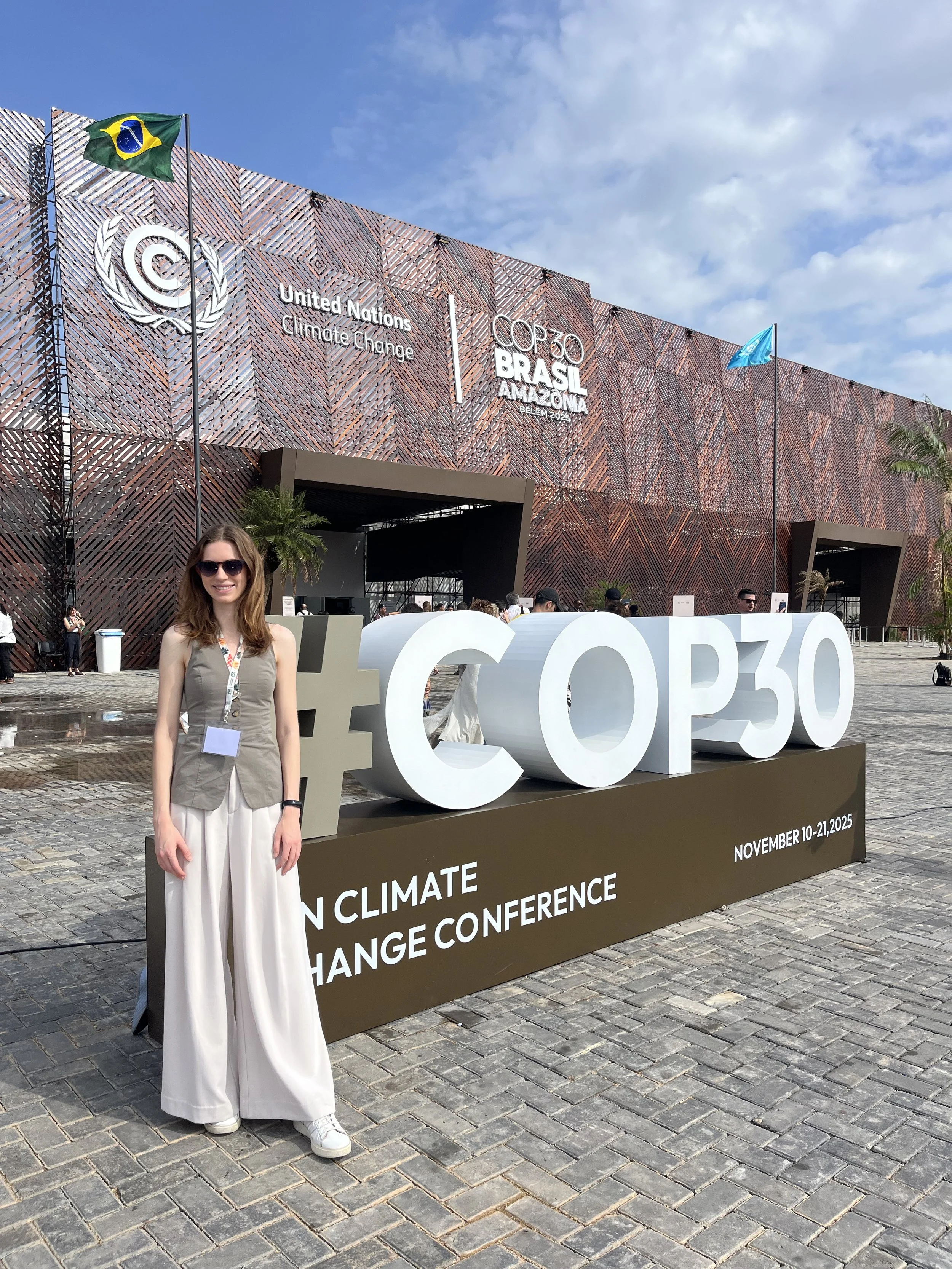
Attending a UN Climate Change Conference of the Parties (COP) has been a dream of mine for years, and this November I finally experienced it firsthand as part of the Tufts University delegation to COP30 in Belém, Brazil. The conference offered an incredible learning opportunity to see theory put into practice, and to witness the delicate diplomacy of international climate negotiations in real life. Situated at the mouth of the Amazon Delta and surrounded by the rainforest, the location of the conference was also a visual reminder of both the urgency and the stakes of global climate action.
Dubbed variously as the COP of implementation, adaptation, and truth, COP30 aimed to turn mitigation and finance commitments into concrete actions, set global goals on adaptation, and defeat climate denialism. The opening plenary set a clear tone. Watching on a screen outside the plenary room due to limited space inside, I listened to President Lula emphasize that climate change is ‘not a threat of the future, but already a tragedy of the present time.’ He paid homage to the people of Pará, highlighted the need to reverse deforestation, and argued that multilateral approaches are essential, saying that ‘our job is not to fight each other, but to fight the climate crisis together.’
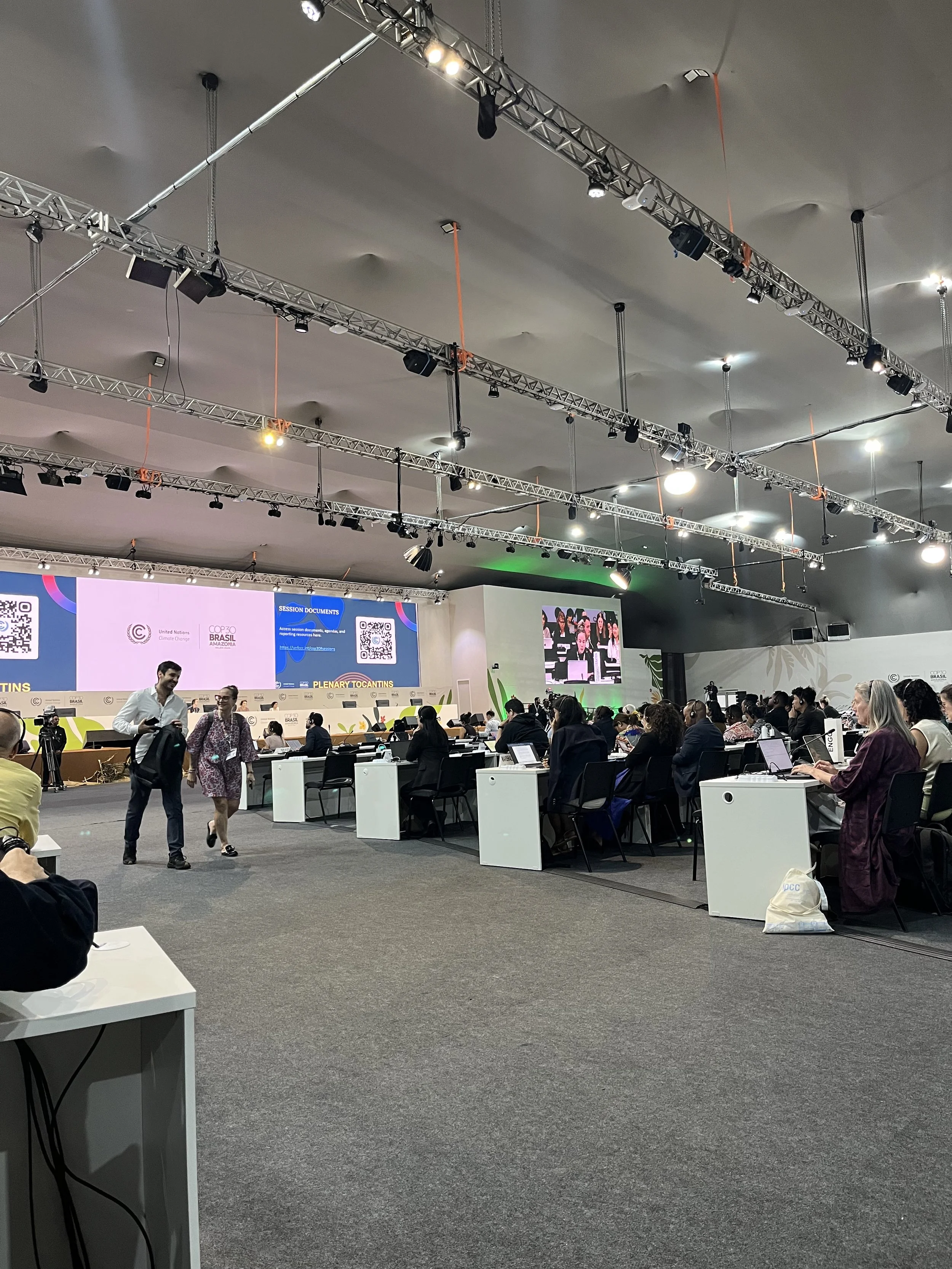
Despite the strong start, an agenda fight shaped much of the negotiations during the first week, highlighting contentious issues such as climate finance, unilateral trade measures, the ambition gap in the current NDCs, a roadmap for transitioning away from fossil fuels, and what science sources to use. I witnessed the last topic playing out in a negotiating session where Saudi Arabia suggested that the IPCC, long seen as an authoritative source of consensus-based science, should only be considered ‘one scientific source’ as opposed to ‘the primary source.’ This was discouraging to hear, given the current disinformation in the United States about climate science. The absence of the United States was also felt in the negotiations, allowing certain voices such as Saudi Arabia to be louder, increasing expectations on the EU, and opening more room for leadership from countries like China who had large delegations at COP. However, American subnational actors and civil society were still present, and other nations remained engaged, which was a promising sign that progress is possible even when political setbacks occur.
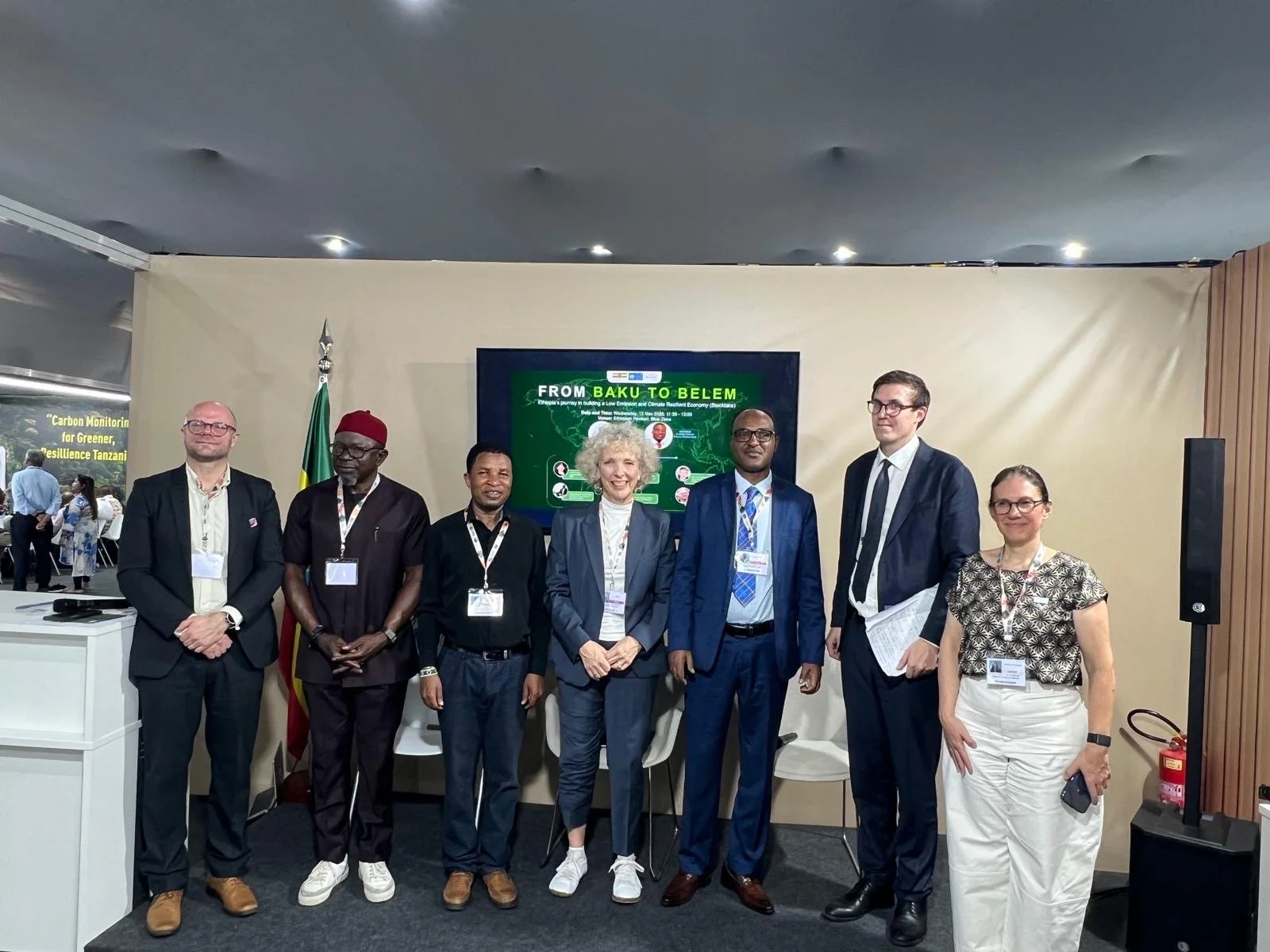
While the negotiations were slow to kick into gear, there was an abundance of official side events and pavilion talks to attend in addition to the negotiations. I sat in on multiple sessions about climate finance, just energy transitions, and renewable energy, connecting what I have learned in classes at Fletcher to action on the ground. Panels emphasized decentralized energy solutions to close last-mile energy access gaps, how catalytic capital can absorb risk and unlock private investment in SDG-aligned projects, and the need to prioritize locally led approaches to climate action. They also highlighted the criticality of just transitions, arguing that decarbonization must not come at the expense of development and economic growth in developing economies, and pathways must prioritize equitable outcomes, job creation, and inclusive growth.
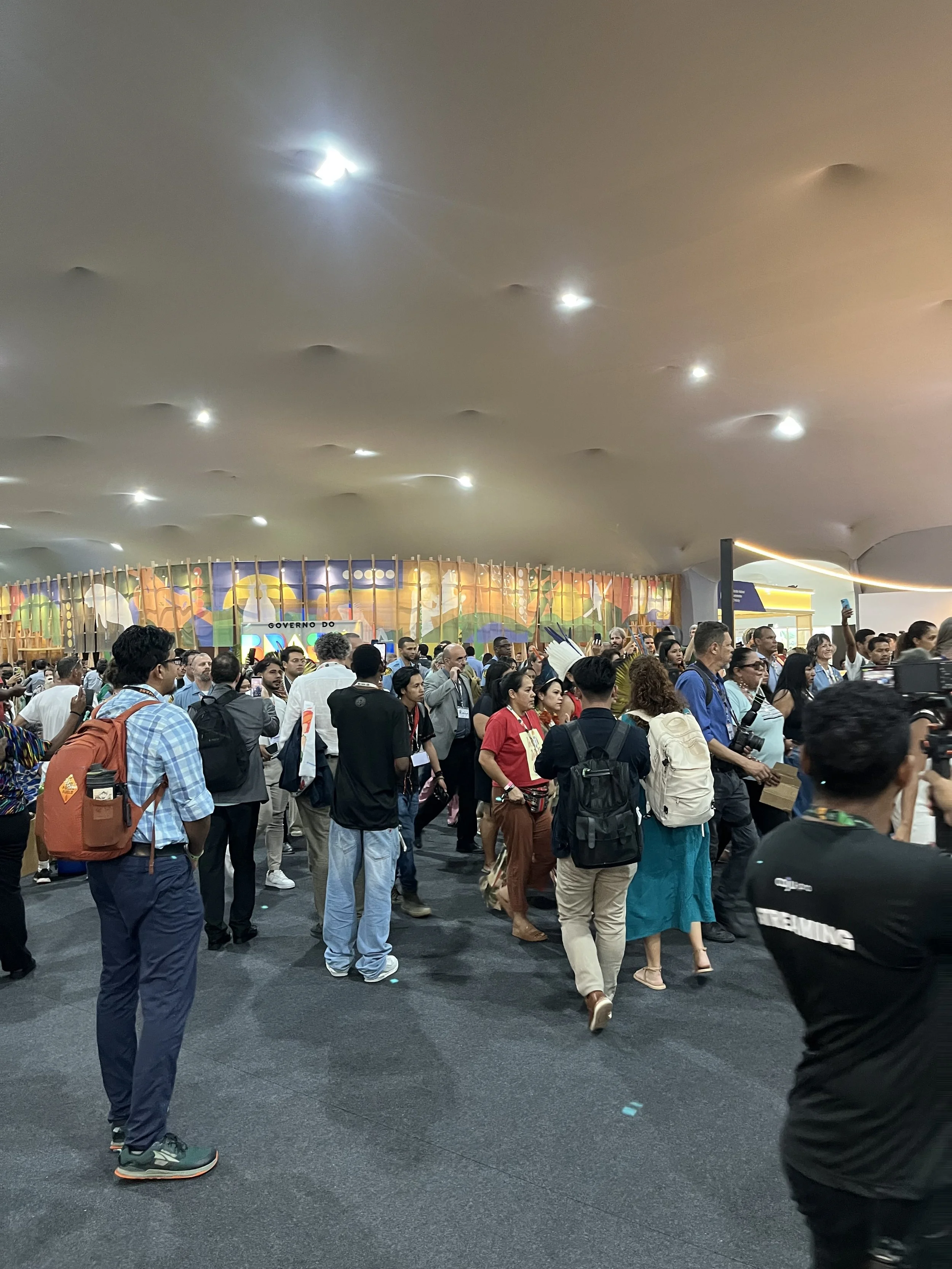
Civil society was also central to the conference experience, which was heartening to see after previous COPs were held in countries that limited civil society participation and activism. Indigenous groups and local activists held demonstrations at the conference and throughout Belém, reminding negotiators and participants that climate change disproportionately affects marginalized communities on the frontlines. Their presence reinforced that climate governance must place people at the center and that accountability, transparency, and measurable actions are essential to maintain trust and drive real-world outcomes.
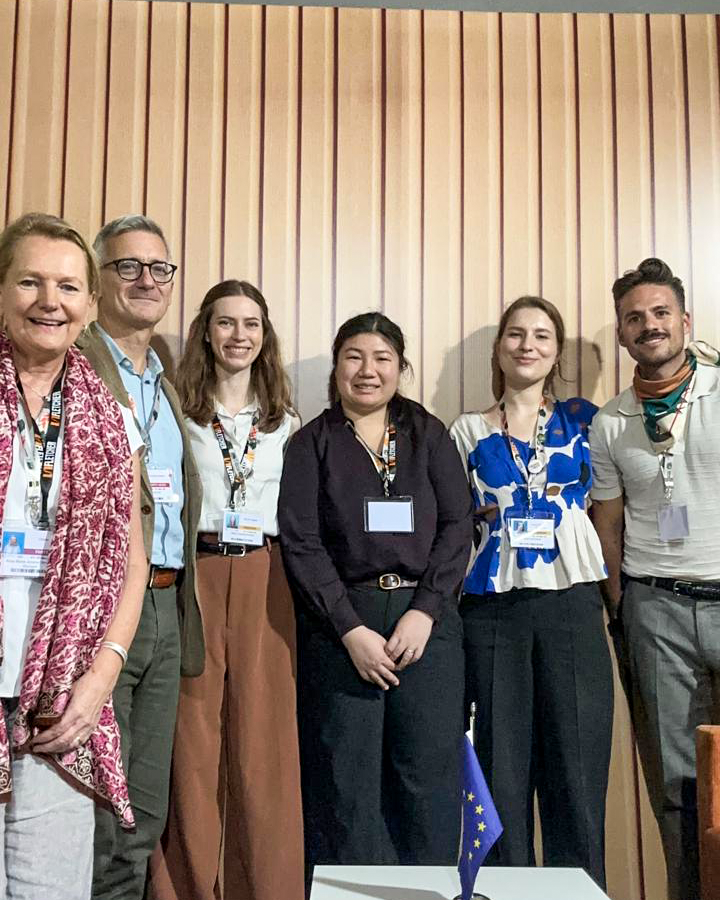
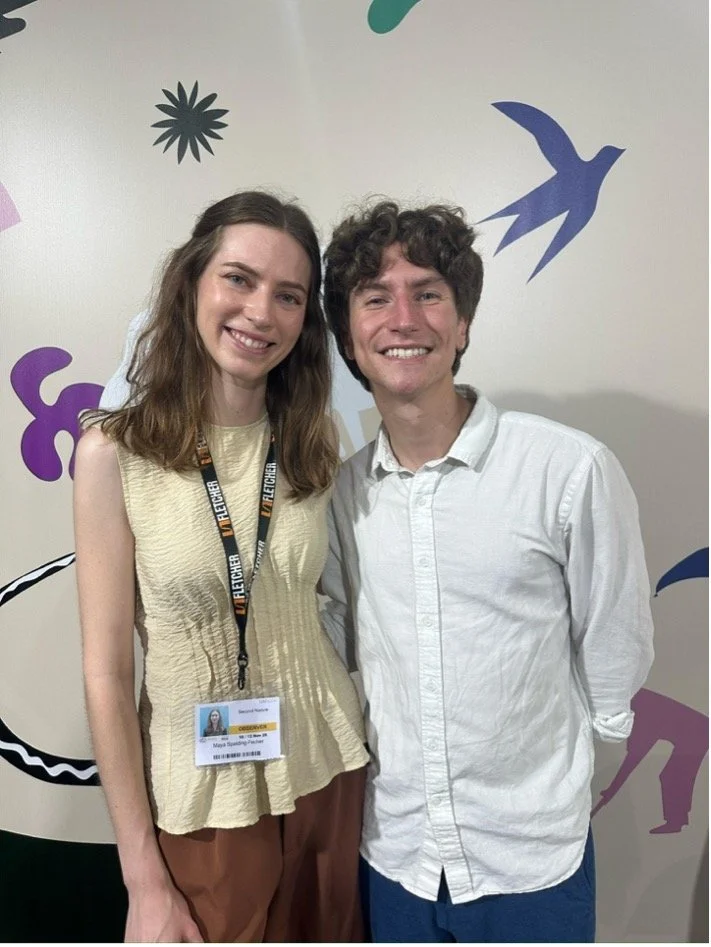
One of the most exciting aspects of COP30 was the opportunity to meet and engage with individuals in the field. I worked closely with Jennifer Morgan—the former German State Secretary and Special Envoy for International Climate Action—to help facilitate bilateral meetings and I attended briefings with leading voices in international climate law including Jake Werksman and Anna Schulz, who shared insights from the EU and LDC perspectives, respectively. I also had the privilege of meeting former Vice President Al Gore and chatted with Sue Biniaz, a famed former lead U.S. climate lawyer, in the hallways of the Blue Zone. I also reconnected with a friend from high school whose company is working to solarize boats in the Amazon!


COP30 reinforced that, while we have made measurable progress since the Paris Agreement was adopted in 2015, the pace of action and finance must accelerate significantly to meet the scale of the crisis (or in Lula’s words, we are ‘moving in the right direction, but at the wrong speed’). What gave me hope however, especially coming from the current political environment in the United States, was being among so many countries, organizations, and individuals committed to implementing positive change. It reminded me that, even when there are challenges to the multilateral system and to climate ambition, there is still meaningful action happening on the ground, driven by the daily work of governments, institutions, financiers, communities, and advocates around the world. The true test of this COP will be what is hammered out at the end of the negotiations, and how much substance the final product will have, whether it is a political statement, COP decision, or a roadmap.
Overall, this experience strengthened my commitment to advancing just and rapid climate solutions. The lessons, connections, and inspiration I gained in Belém will guide my future work as I continue to engage in the urgent task of fighting the climate crisis collaboratively and equitably.

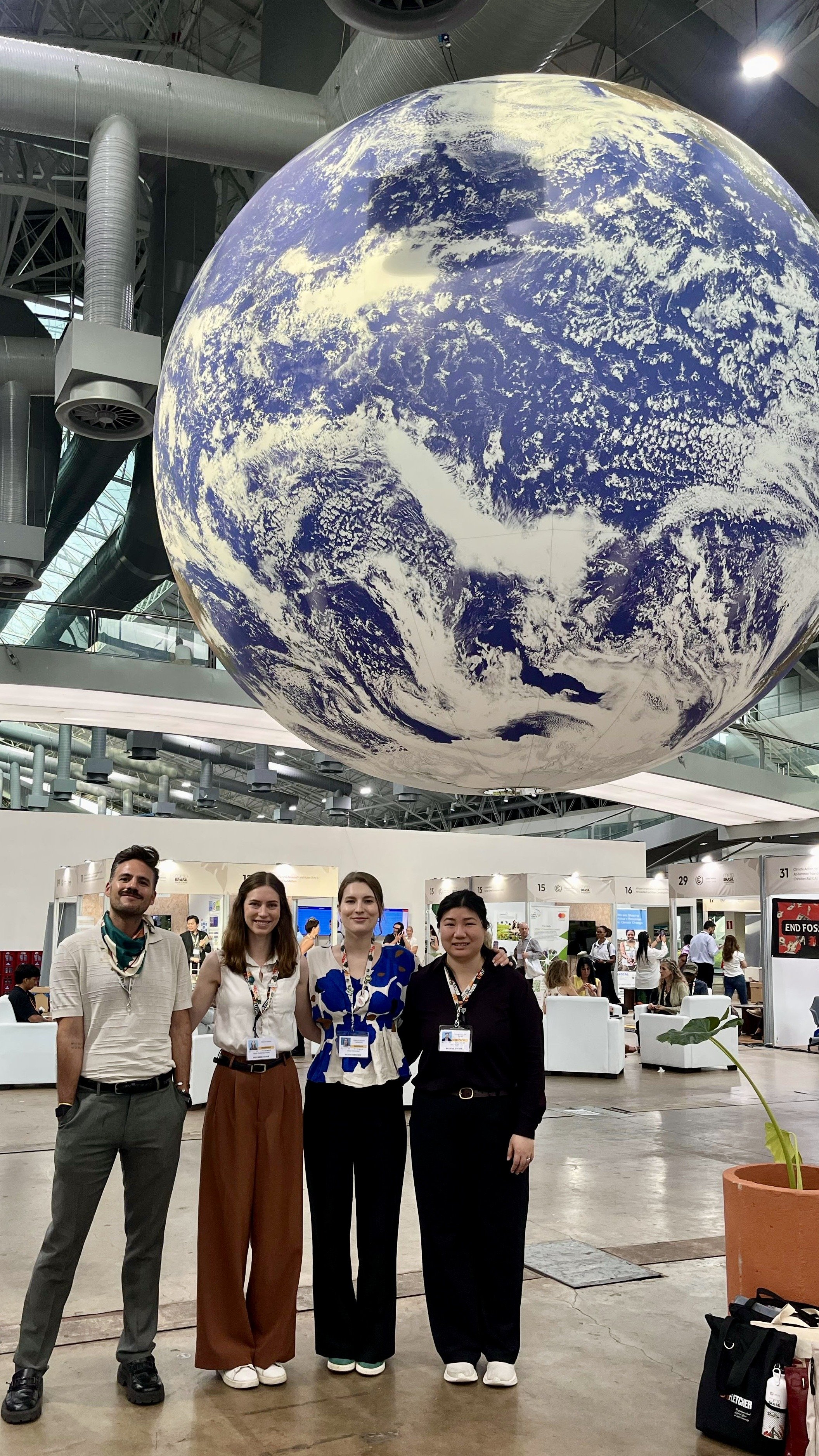
Maya Spalding-Fecher is a second-year MALD student at The Fletcher School studying International Development & Environmental Policy and International Business. She is interested in understanding how additional capital can be to mobilized to accelerate clean energy deployment in emerging markets and developing economies.