
The Liquid Legacy: Why India’s Ancient Water Culture is a Model for Global Water Conservation

This blog is a part of our 2025-2026 Climate and Cultural Heritage Series made possible by the Fletcher Center for International Environment and Resource Policy and the Fletcher Office for Inclusive Excellence.
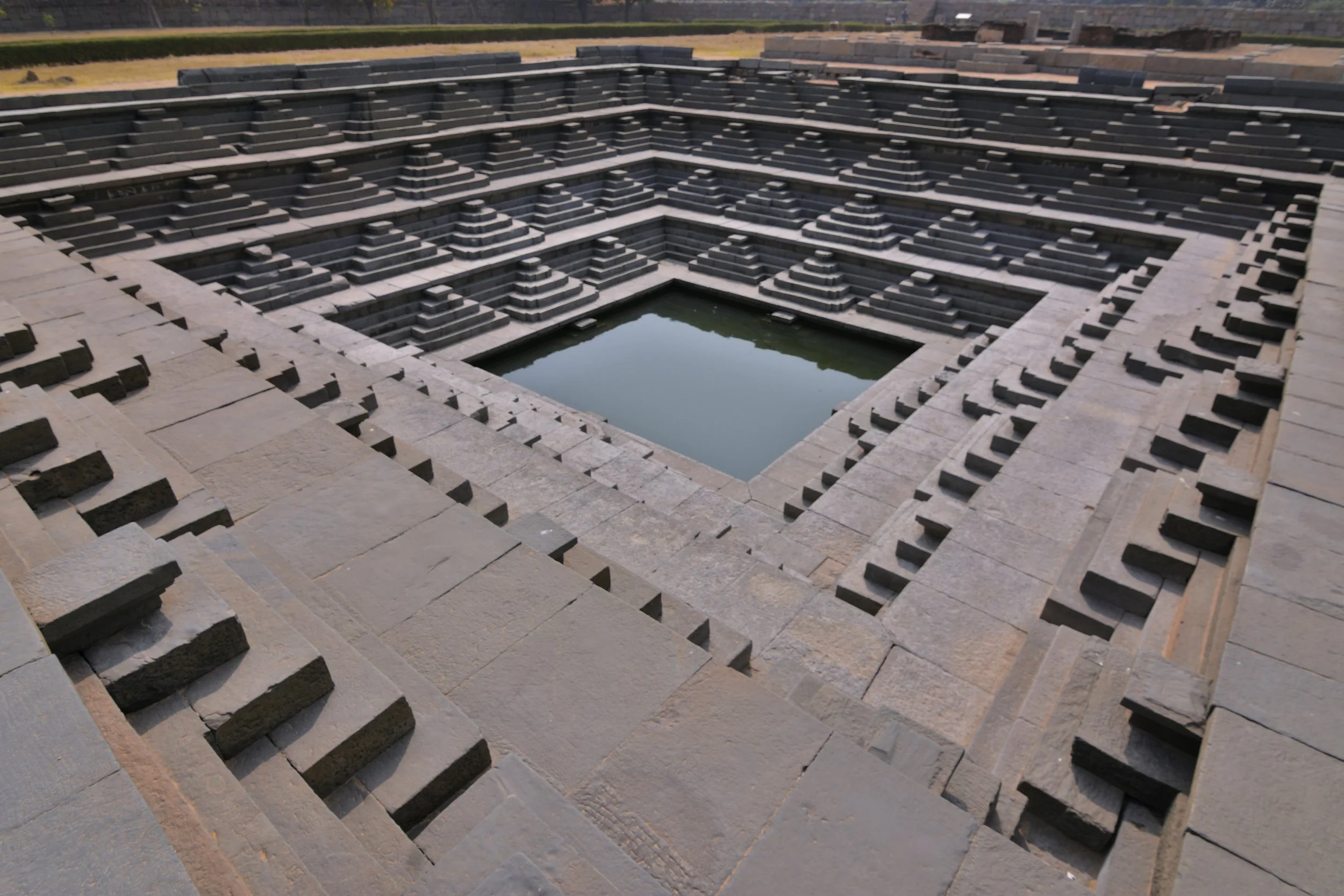
Water collection, storage and distribution systems in Hampi
By: Monsoon Republic
For five millennia, the Indian subcontinent has navigated one of the most volatile weather patterns on Earth: the Great Monsoon. This seasonal cycle of extreme deluge followed by months of total aridity necessitates a unique relationship with water. Today, as our climate becomes increasingly erratic, the ancient engineering and cultural ethos of India known as Jal Sanskriti (Water Culture) provides a blueprint for resilience that modern, centralized infrastructure often lacks.
Rather than relying on massive, energy-intensive dams that disrupt ecosystems, India’s traditional systems have prioritized a decentralized community-led approach steeped in nature. As the world seeks to build climate proof landscapes such as The Sunderbans (a UNESCO World Heritage Site) the wisdom of the past is proving to be our most advanced tool for the future.
The Indian Philosophy
At the heart of India’s water culture is the transition of the outlook from ‘water as a resource’ to ‘water as a life-force.’ Traditional Indian ethos doesn’t see water as a mere commodity to be piped and billed. It is seen as sacred resource to be held collectively by the community. This is not just a spiritual sentiment but a practical governance model.
Historically, water management was decentralized at the village level. In rural societies, the community rather than the government office, was responsible for the upkeep of their local well, pond or tank. This was built on a system of collective accountability. When a village ‘owns its water source’, they are incentivized to protect it from pollution, prevent encroachment and ensure equitable distribution.
Tamil Nadu: The land of Cascading Tanks
One of the most sophisticated examples of large-scale water management is found in Indian state of Tamil Nadu. For centuries, the landscape of this state has been defined by Eris (cascading tanks). These are not isolated ponds, they are a marvel of interconnected hydraulic engineering designed to ‘catch the rain where it falls.’
The Eri System consists of earthen embankments built along the natural contours of the land to capture monsoon runoff. These tanks are linked in a chain such that when the highest tank in the series reaches full capacity its overflow is channeled via gravity into the next tank further downstream. This cascading network turns the entire state into a giant sponge, slowing down the velocity of floodwaters, preventing erosion and ensuring that every drop of rain is stored for irrigation and groundwater recharge.
By prioritizing these nature-based sponges over concrete river embankments, Tamil Nadu’s ancestors created a system that could breathe with the seasons i.e. soaking up the excess and releasing it slowly during the dry months. This is exactly the kind of elastic infrastructure modern climate scientists are now advocating for globally.
Engineered for the Extremes: The Indian Regional Blueprint
India’s diverse geography has historically led to the development of hyper local solutions, each uniquely suited to its specific environment. These systems offer direct inspiration for global climate adaptation techniques.
1. The Arid West: Subterranean Sanctuaries
In the scorching deserts of Rajasthan and Gujarat, the primary enemy of water is evaporation. The local solution was the development of Stepwell (Baoli or Vav). These architectural wonders descend deep into the earth to reach the water table. By storing water underground and surrounding it with stone architecture, these structures protected the supply from the sun, keeping it cool and drinkable even in 45°C heat.
Equally vital is the Johad, a crescent-shaped earthen check dam. By slowing down monsoon runoff on parched land, Johads allow water to seep into the earth. This recharges the underground bank, ensuring that wells remain full even when surface ponds have dried up.
2. The Northeast: Gravity and Bamboo
In the hills of Meghalaya, where the terrain is too steep for conventional canals, tribal communities developed the Bamboo Drip Irrigation technique. Using nothing but gravity and a network of bamboo pipes, they channel water from hilltop springs directly to the roots of their crops. This system delivers water with about 90% efficiency without using a single watt of electricity. It is a perfect model for low-carbon, high-efficiency agriculture.
3. The Riverine Plains
In the plains of Bihar, the Ahar-Pyne system was developed to coexist with flooding. Pynes (channels) divert river water into Ahars (embanked tanks). Rather than trying to conquer the river with high walls that would eventually breach, this system embraced the flood, utilized the excess water to nourish the plains and enrich the soil with its natural silt.
Lessons for Global Resilience
Modern water infrastructure is often rigid. It is designed based on historical rainfall averages that are no longer reliable. India’s traditional systems, conversely, are an elastic model. They are built to handle the too much and the too little. They offer three critical lessons for global water conservation:
Groundwater Priority: While many regions have traditionally focused on surface reservoirs (which silt up and evaporate), India’s water culture focuses on groundwater recharge. In a warming world, storing water underground is the most resilient strategy we have.
Low Energy, High Impact: By relying on gravity and local materials like mud, stone and lime, these systems have a near zero carbon footprint compared to modern pumping stations and desalination plants.
Decentralization: By spreading water storage across thousands of small local structures rather than one massive dam, the system becomes resilient and less fragile. If one tank fails, the rest of the network continues to function.
The Modern Success: Rajendra Singh
The power of this ancient wisdom is best demonstrated by the work of Rajendra Singh, known as the Water Man of India. By mobilizing local communities in Rajasthan to revive thousands of traditional Johads, he successfully brought many dead rivers back to life. As a result, many abandoned villages in the areas were re-populated and farming resumed in hundreds of villages that had once been prone to drought. His work, which earned him the Stockholm Water Prize, proves that these ancestral methods are not just historical curiosities rather they are among the most effective tools for modern climate adaptation.
Conclusion
The path to global climate resilience does not require us to abandon modern science but rather to ground it in ancient wisdom. By integrating India’s decentralized Jal-Sanskriti with modern satellite mapping and data, we can create landscapes that are both productive and protected, as seen in these initiatives. The future of water management is not a high-pressure pipe rather it is a community led sponge. In the ripples of a Tamil Nadu Eri or the depths of a Rajasthani stepwell lies a 5000 year old reminder: to manage water is to manage life itself.
Monsoon Republic is a Master of Law and Diplomacy candidate at The Fletcher School, Tufts University, where he contributes to the Climate Policy Lab. Focusing on the intersection of technology, security, policy and global governance, he is a dedicated advocate for utilizing traditional wisdom and ancestral systems to solve modern environmental and security challenges.