
Most climate victims are stuck in a policy blind spot: The case for disability-inclusive solutions
This blog is a part of our 2025-2026 Climate and Cultural Heritage Series made possible by the Fletcher Center for International Environment and Resource Policy and the Fletcher Office for Inclusive Excellence.
By: Colas Richard
When a warming planet is colliding with long-standing social exclusion, climate change is not only a crisis to measure in degrees, but in lives. Few groups feel this more acutely than persons with disabilities, and they represent one in six people globally. However, as we mark the International Day of Persons with Disabilities this December 3rd, climate policy continues to overlook one of the world’s largest communities, which remains disproportionately at risk and systematically sidelined in the very policies meant to protect us all.
It is time to confront a neglected frontline of climate action by recognizing the extent to which people with disabilities face higher risks and deeper inequalities exacerbated by climate change. Examining their inclusion, or rather exclusion, from climate policy globally so far can help us identify what are the concrete next steps to design genuine disability-inclusive climate actions.
Climate risks and marginalization: the double burden of persons with disabilities
Research and catastrophe reports increasingly reveal that persons with disabilities are hit the hardest during and in the aftermath of natural disasters. They experience two to four times higher mortality and greater harm in both extreme weather events and the gradual effects of climate change. Between 2001 and 2018, 89% of fatalities of Australian heatwaves had one or multiple disabilities.
However, natural disasters alone don't explain the heightened risk of people with disabilities. Their exposure and vulnerability to climate impacts is primarily due to socio-economic marginalization. At the policy level, they are excluded from policy creation, the outcome of which is often ableist policy designs. More systematically, institutional, social, and economic barriers, like essential and financial services inaccessibility, lower level of education, and higher poverty rates, channel and reinforce their marginalization.
Human rights groups such as Human Rights Watch have reported that when disasters lead to displacement, people with disabilities experience increased vulnerability as compared to persons without disabilities. Barriers such as information and resource accessibility, higher poverty and food insecurity rates, and mobility issues, mean that persons with disabilities are more likely to be left behind during a disaster and, in the aftermath, fall deeper into poverty due to loss of livelihood and wellbeing.
Furthermore, not all are equal in front of climate change impacts. 80% of the world’s 1 billion persons with disabilities live in low- and middle-income countries, which are highly climate vulnerable. Experiences also differ between persons at the intersection of other vulnerabilities and discriminations. Factors such as age, gender, ethnicity, or refugee status amplify risks, while different types of disabilities, like intellectual disabilities, require distinct communication, support, and adaptation measures.
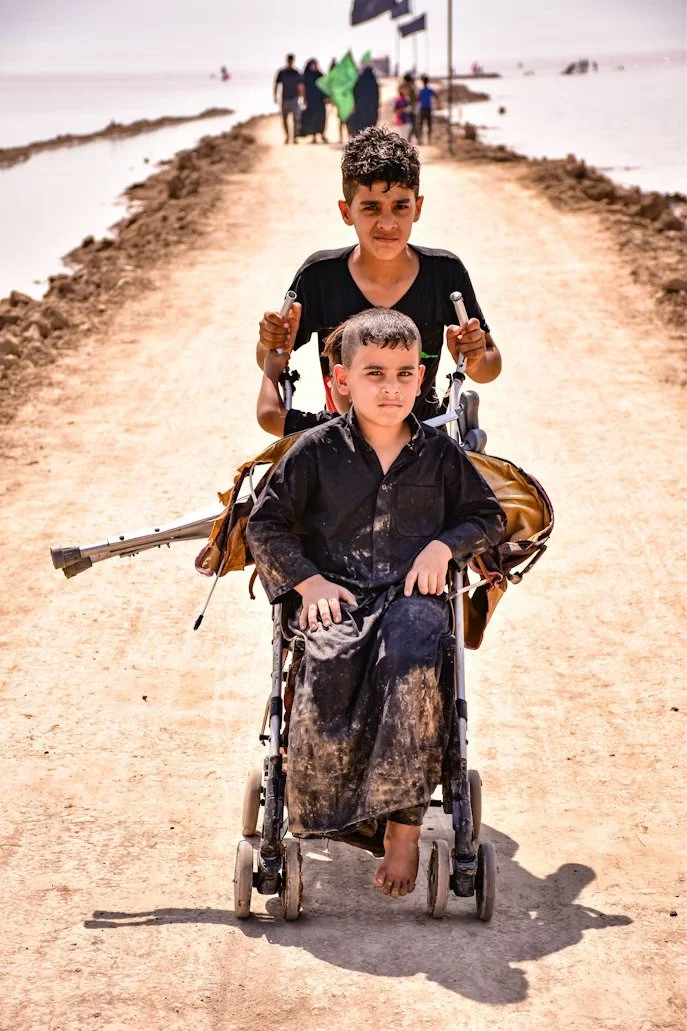
Credit: Photo by أخٌفيالله on Unsplash.
Inclusion in climate policy so far: progress on paper, exclusion in practice
Under international human rights law, states have a legal obligation to protect persons with disabilities in situations of risk, including those created by climate change. Article 11 of the UN Convention on the Rights of Persons with Disabilities (UNCRPD), ratified by 191 parties, requires governments to “take all necessary measures” to ensure their safety and protection during emergencies and natural disasters. UNFCCC decisions and the UN Human Rights Council resolutions have likewise affirmed that disability inclusion is an essential component of a just climate response.
Despite these commitments, implementation remains weak. Only 41 of 195 parties to the Paris Agreement mention disability in their NDCs, meaning 79% make no reference at all. Only 17 parties adopted concrete steps such as accessible infrastructure or inclusive early-warning systems, the rest limit themselves to broad acknowledgments of vulnerability. Costa Rica, Vanuatu, and Canada stand out, while many industrialized countries perform poorly in comparison to their resources and higher disability rates. Adaptation policies perform only slightly better with 38.5% mentioning disability, but even fewer integrate persons with disabilities into decision-making. This persistent exclusion constitutes a systemic breach of states’ obligations under the UNCRPD.
And exclusion persists. The UNFCCC still lacks a formal disability constituency despite disability organizations repeatedly calling for this recognitionto be granted to other marginalized groups. The June 2025, ICJ landmark Advisory Opinion on climate change omitted any explicit reference to persons with disabilities, missing the opportunity to anchor disability rights in global obligations. By contrast, the Inter-American Court of Human Rights adopted a more progressive approach earlier this year, explicitly recognizing persons with disabilities as a group requiring special protection and acknowledging the compounding vulnerabilities climate impacts exacerbate.
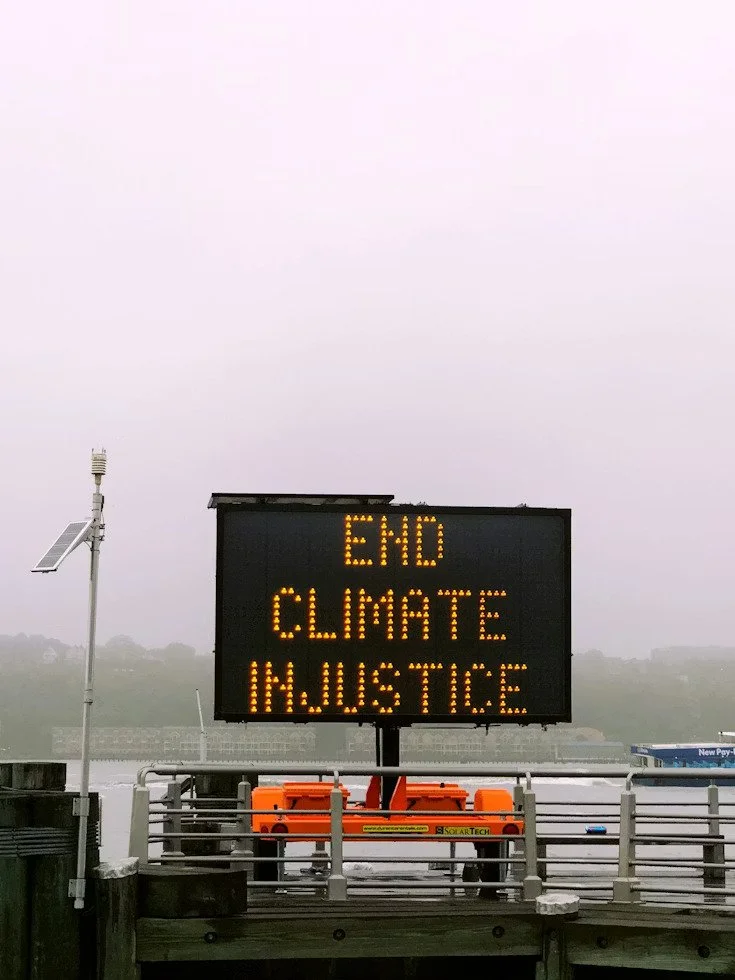
Credit: Photo by Jon Tyson on Unsplash.
Building a disability-inclusive climate future
Designing disability-inclusive climate policies requires an intersectional approach for responses to reflect overlapping inequalities. This requires joining forces across minority movements, accelerating the collection of disaggregated data, and including people with disabilities in decision-making. They and their representative organizations must be involved as full co-designers in negotiations, policymaking, and research instead of mere consultees. Their lived experience of navigating systems never built for them should be considered as evidence for policy formulation.
Examples already exist. The European Disability Forum’s partnership on the Energy Performance of Buildings Directive shows how disability advocates shaped climate laws that would otherwise overlook accessibility. Community mapping initiatives in the Pacific demonstrate how local organizations of persons with disabilities and governments can jointly design adaptation solutions.
Inclusive bottom-up processes at the local level often succeed where national systems lag. Even if the international framework were to be strengthened and enforced, the diversity of environments and intersecting disabilities require local and tailored solutions. Accelerating their adoption with full participation of persons with disabilities is key to building resilience and a just climate future. Otherwise, we will continue repeating the same policy failures and leaving those most at risk behind.
Colas Richard is a MATA student at The Fletcher School studying transatlantic affairs. Their interests lie in European politics and governance, international affairs, with a specialization in environmental and energy policies.