
COP(out) or the Best We Could Have Done? Reflections on COP30 In Belém, Brazil
By Krishna Priya
COP30, like all the previous COPs started out with a lot of expectations. The Brazilian presidency’s approach and narratives around the COP as the “COP of Truth”, “Implementation COP”, and “Forest COP” created much needed hope and optimism in the challenging geopolitical times we live in.
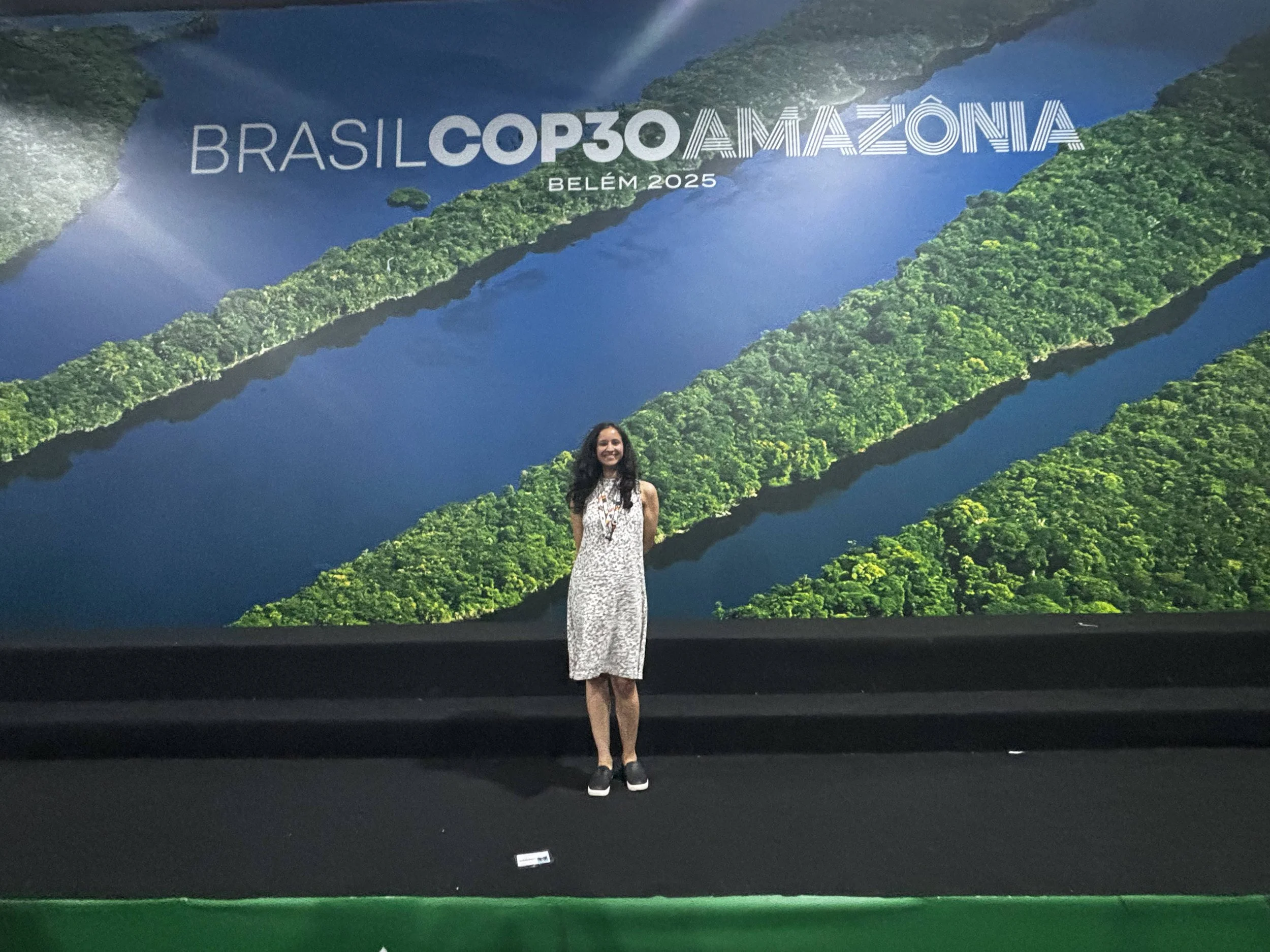
But before I left for Brazil, one of my professors advised that I go to COP with cautious optimism as he thought that this would not be a COP where weighty decisions would be made, especially with the absence of the United States. In addition to the follow-up on the much-debated New Collective Quantified Goal on Climate Finance (NCQG) from Baku, we expected that the EU Carbon Border Adjustment Mechanism (CBAM) would also find its way into the discussions. And it did, but under the alias of “unilateral trade measures”. But with some strategic maneuvering, the Brazilian presidency avoided having the two issues on the formal agenda and aimed to include them in a separate political package – a lesson in diplomatic practice. The presidency also set out to include two other issues in this package: roadmaps on fossil fuel phaseout and deforestation, and strong language on the insufficiency of current NDC pathways in meeting the 1.5C temperature goal, which was called the Mutirão Decision
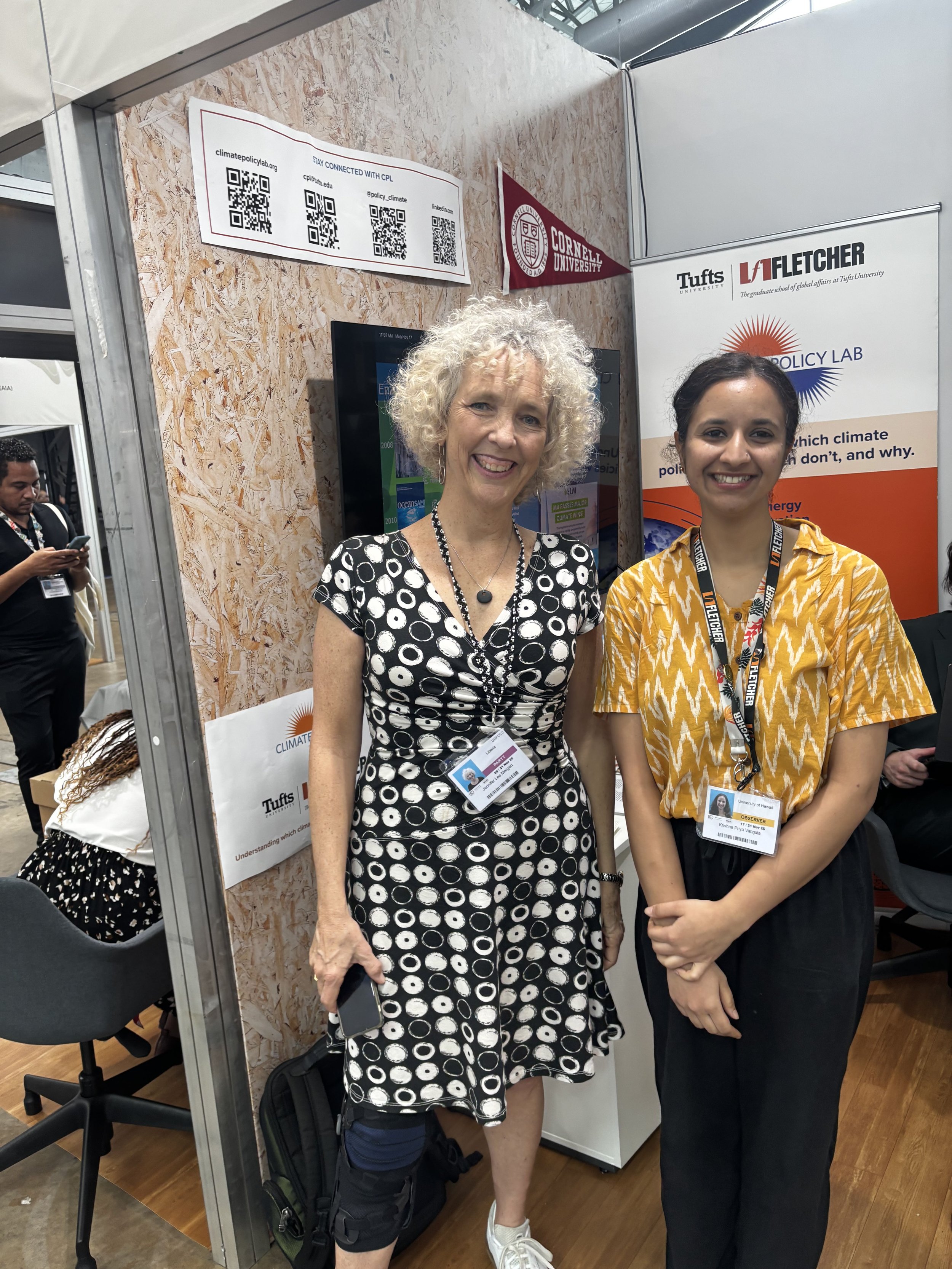
The major themes that I followed during the second week were on adaptation, loss and damage, synergies between nature and climate action, and the Belém political package. I was shadowing Ms. Jennifer Morgan, senior fellow at the Climate Policy Lab, which provided me with a unique opportunity to attend bilateral meetings with Parties to discuss the major issues in the package. Through this, I was able to witness diplomacy in practice firsthand – a truly unforgettable learning experience that helped me appreciate the importance of soft skills and the art of conversation. This opportunity also helped me understand and appreciate the concerns and priorities of the Parties, and the tradeoffs within the four issues at hand from very close quarters.
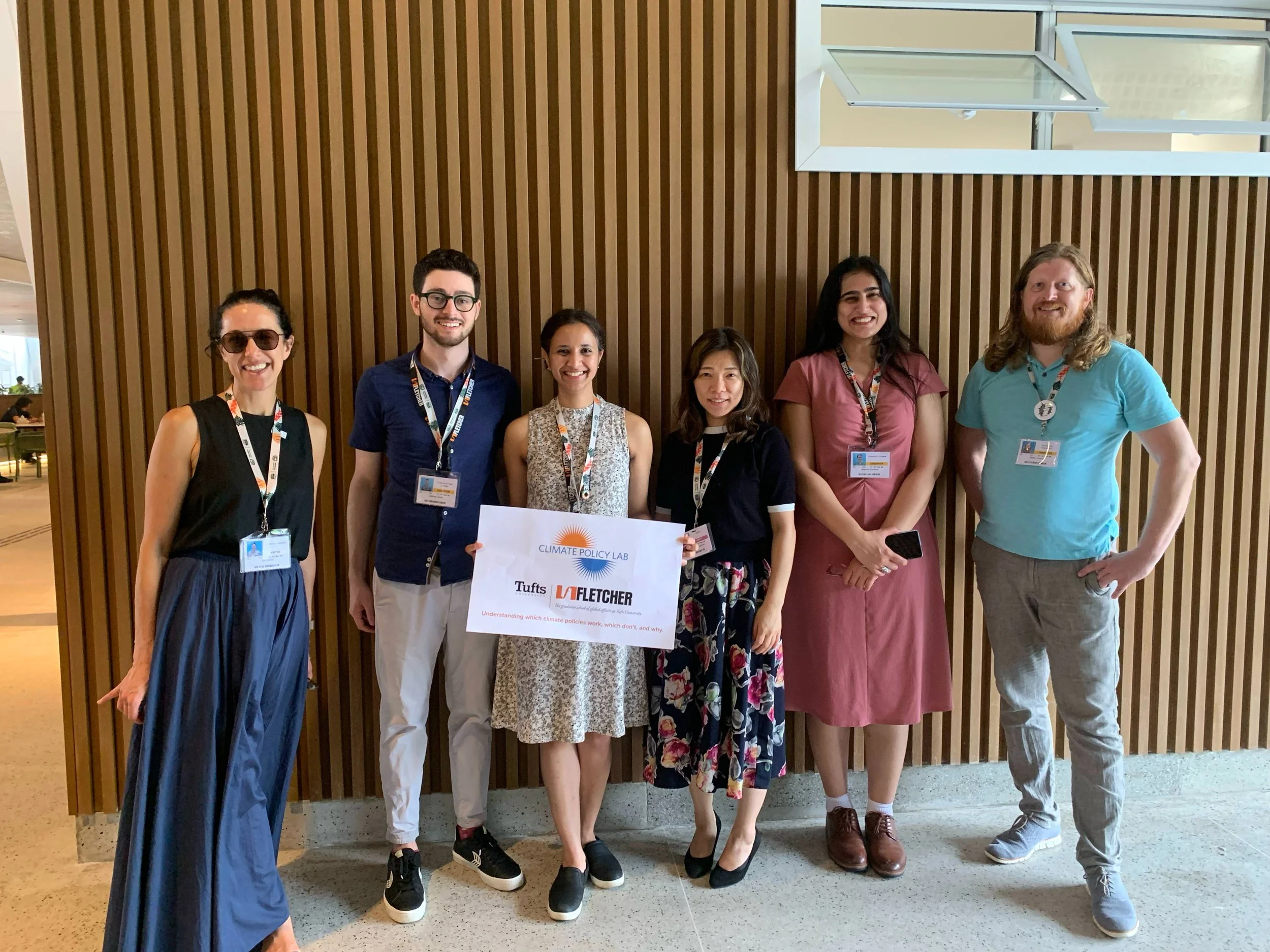
I attended panel discussions in the Blue Zone on the mainstreaming of nature in NDCs at the Nature Hub Pavilion, water security at the Multilateral Development Banks Pavilion, and nature security as national security at the UK Pavilion among numerous other extremely enriching and insightful discussions on some of the most pressing issues at the intersections of climate action, development, competing political and national priorities, and the state of international trade. I also had the opportunity to meet Fletcher alumni that were attending the conference and gain insights from their experience as former members of the US delegation, UN staff members, and members of the civil society. I was also able to connect and interact with a range of professionals engaged in diverse roles within the climate action space like media and communications, research, and also with other students that were representing their institutions.
On the adaptation front, I was able to attend various informal consultations on the Global Goal on Adaptation (GGA) and the National Adaptation Plans (NAP). Through this experience, I was able to understand how the Parties approached negotiation texts and attempted to balance their national priorities, priorities of their respective country groupings and the common goals enshrined in the Paris Agreement. However, these discussions always ended up stopping on the finance question: with the Like Minded Developing Countries (LMDC), Independent Association of Latin America and the Caribbean (AILAC) and African Group of Negotiators (AGN) pushing for clarity on finance flows and prioritizing highly concessional public finance from developed countries, while the EU and other Annex-1 countries pushing back. On the NAP consultations, I had the opportunity to follow discussions on synergies, specifically that called for an increased emphasis on biodiversity – which was vehemently rejected by China on behalf of the LMDC group. Their rationale was that it was inappropriate to highlight a single sector i.e., biodiversity, while climate adaptation plans impact every sector in an economy. This was a definite blow to the presidency’s attempt to draw attention to forests and biodiversity, especially given that this COP was dubbed the “Forest COP”, the discussions on the deforestation roadmap and a very visible presence of civil society drawing attention to the voices of indigenous peoples, intergenerational equity, entrenchment of fossil fuels, and climate debt, among numerous other concerns. The GGA discussions resulted in a final text that was fundamentally weaker, with the adaptation indicators going down from a 100+ to 59 and there was no language on implementation pathways or finance – an issue that would come to a head during the closing plenary session.
The major bone of contention at this COP, however, was the roadmap on fossil fuel phaseout. With reports of around 80 countries supporting some language on phaseout in the first week of COP, the subsequently delayed Mutirão Package text had no references to phasing out fossil fuels and no references to halting deforestation. It is important to note that the COP process was delayed not only due to the Parties’ varying redlines but also because of a fire that happened on the penultimate day of the conference. The fire caused the venue to shut down for the day and negotiations were consequently halted.
Closing Plenary: Justificatory Discourse and the Sleep Deprivation Defense
The closing plenary started a good 27 hours later than it was supposed to with most of the agenda items finalized and ready to be formally accepted and finalized or so we thought. We made our way into the Plenary Overflow Room at the designated time, only for the session to begin two hours later with a lot of agenda items being gaveled through rather quickly. As the GGA text and the Sharm-el-Sheikh Mitigation Work Program (MWP) texts were gaveled, there was visible and audible points of orders and interventions raised by AILAC, AGN, Colombia, the EU, Panama, Argentina and Uruguay – which were not considered, and the items were gaveled as final decisions. After this, Colombia took the floor and summarily rejected both the GGA and the MWP texts calling them insufficient and also emphasized on the absence of fossil fuel phaseout language. These concerns were echoed by the EU and the AGN, after which the closing plenary was suspended. As we waited for the session to resume, we could see a number of huddles in the plenary room including one with the COP President and his team.
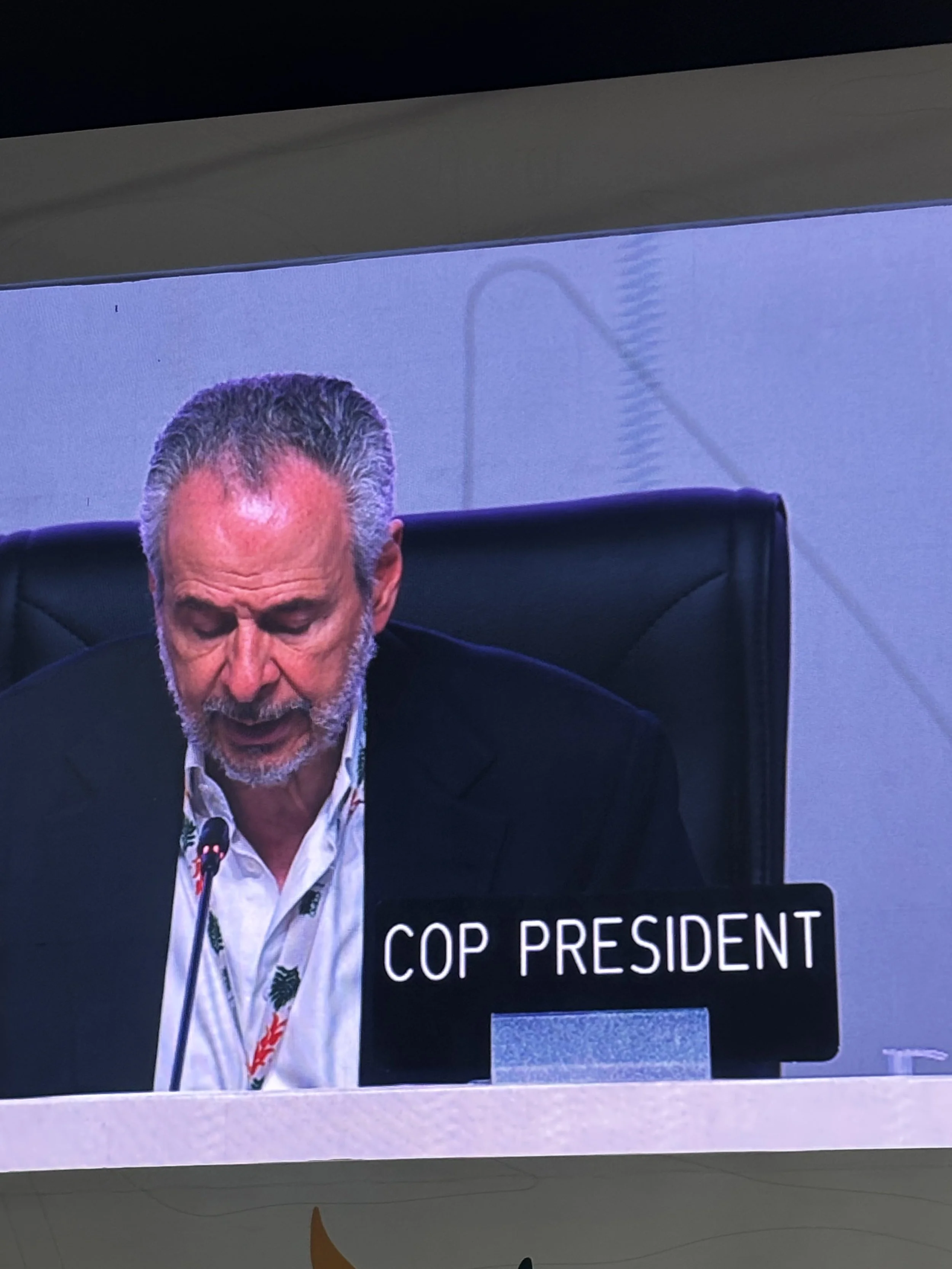
Once the session resumed, the COP President expressed regret over not being able to spot the raised flags before he gaveled away and cited “sleep deprivation” as the justification for missing the points of order and stated that gaveled matters would not be reopened and any objections made by the Parties would be noted and discussed in Bonn in June 2026. Following this, the Russian Federation raised an intervention and called AILAC and Panama’s interventions “childish”, which did not sit well with them and led to some back and forth between the Parties.
As this was going on, I couldn’t help but wonder what “consensus” meant in this instance and was fascinated by the Presidency’s approach to the more controversial issues at hand, not only during the closing plenary but throughout the COP with their ability to leverage shuttle diplomacy, the Mutirão Package workaround to delineate the fossil fuel phaseout, deforestation, CBAM and the finance issue from the formal negotiation agenda items, and their decision to come up with a Fossil Fuel Roadmap and a Deforestation Roadmap after the end of COP30 due to the absence of consensus on these matters during the negotiations. It must be acknowledged that the final Mutirão text did include some language on the 1.5C overshoot, the need for more ambitious NDCs, and deforestation. It did not however, include any language on fossil fuels and very weak language on unilateral trade measures, which I thought was a delicate bargain that was struck to ensure that the COP ended with some outcome that was more or less agreeable to all the Parties.
As I write this reflection, I must share something that Simon Steill, the Executive Secretary of the UNFCCC said during his speech at the closing plenary session
“I’m not saying we’re winning the climate fight. But we are undeniably still in it. We are fighting back.”
And as I told my professor before I left for COP, two steps forward and one step back is still one step forward. I look forward to the next COP in Antalya, which is going to be the first of its kind with Türkiye acting as the COP Presidency, Australia acting as the President of negotiations with Chris Bowen, the Australian Minister for Climate Change and Energy in charge, and a Pre-COP in the Pacific.
I would like to express my sincere gratitude to the Climate Policy Lab, the Center for International Environment and Resource Policy, and the Fletcher School for this wonderful and unforgettable opportunity. I am sure that this experience will help me build a career in the multilateral climate action space and more importantly, keep hope alive as we navigate through the complexities of climate action across governance levels.
Krishna Priya is a second year MALD student specializing in Environmental Policy and Global Governance and a Research Assistant at CIERP. Her areas of focus are climate adaptation and water resource management.