
Reflections from COP30
By Leah Poole-Selters
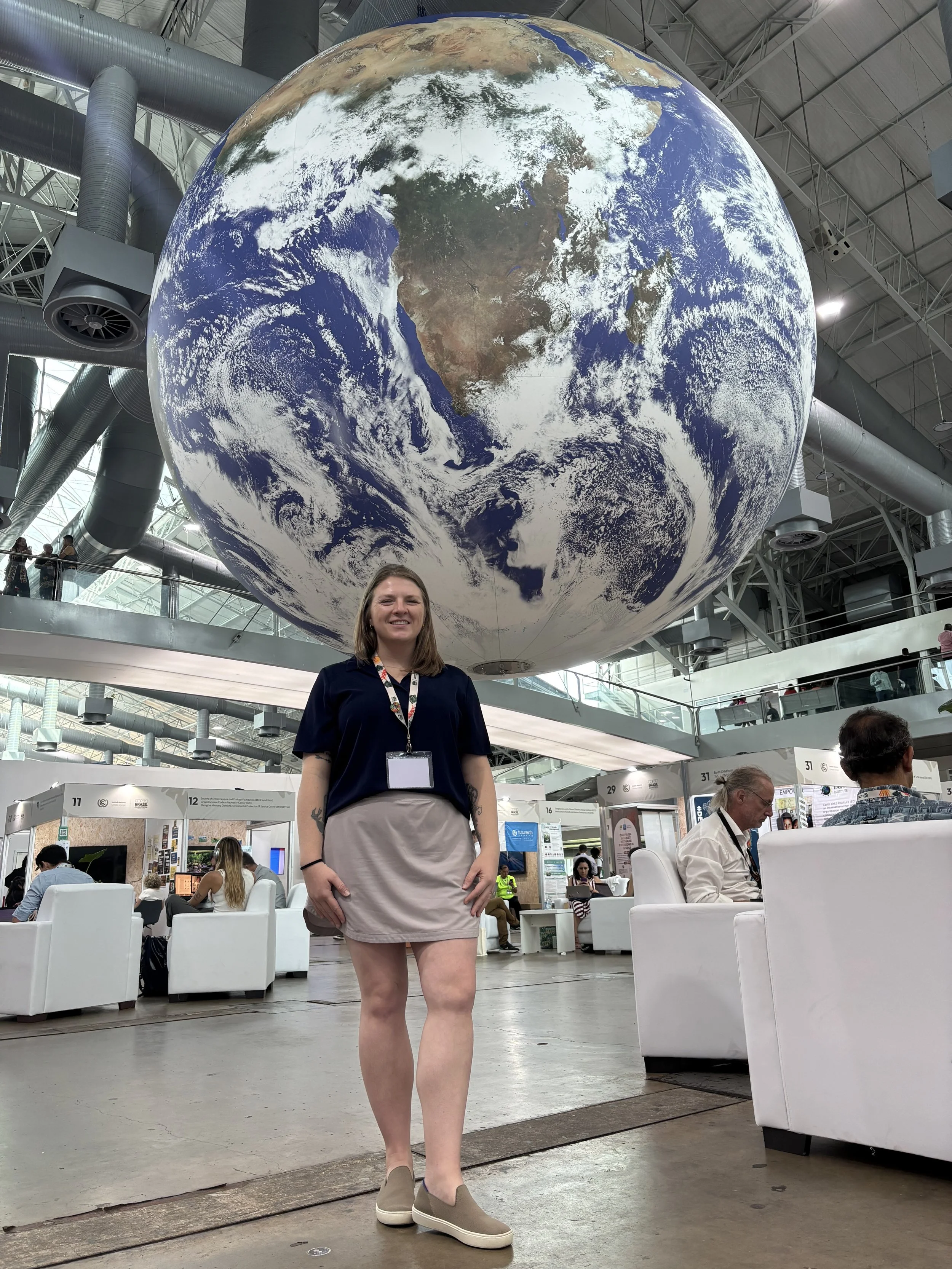
Attending COP30 was an amazing opportunity that deepened my understanding of global climate policy. Prior to attending COP I understood, in theory, that climate negotiations are difficult, but witnessing them firsthand gave me a new respect for how national laws, political realities, and cultural contexts influence final agreements. The question that echoed through my mind all week was simple but unavoidable: Who is going to pay? As countries put forward ambitious targets for mitigation and adaptation, it became clear that financing remains the central barrier to meaningfully scaling climate action. Observing the negotiations, I noticed a heavy reliance on mechanisms established under the Paris Agreement, even though the United States, one of the major funders of that agreement, has pulled out. I left wondering how this financial gap is being addressed behind the scenes, and whether negotiators are fully accounting for it as they shape global commitments.
One of the biggest surprises for me was how much attention was given to adaptation in side sessions. In the media, mitigation dominates the conversation, so I expected the same focus at COP. Instead, adaptation repeatedly took center stage, especially in the sessions focused on human vulnerability. I attended a particularly impactful session modeling projected declines in working capacity in South Asia as temperatures rise. It was a stark reminder that climate impacts are not abstract future risks, but are already reshaping the productivity, health, and safety of people around the world.
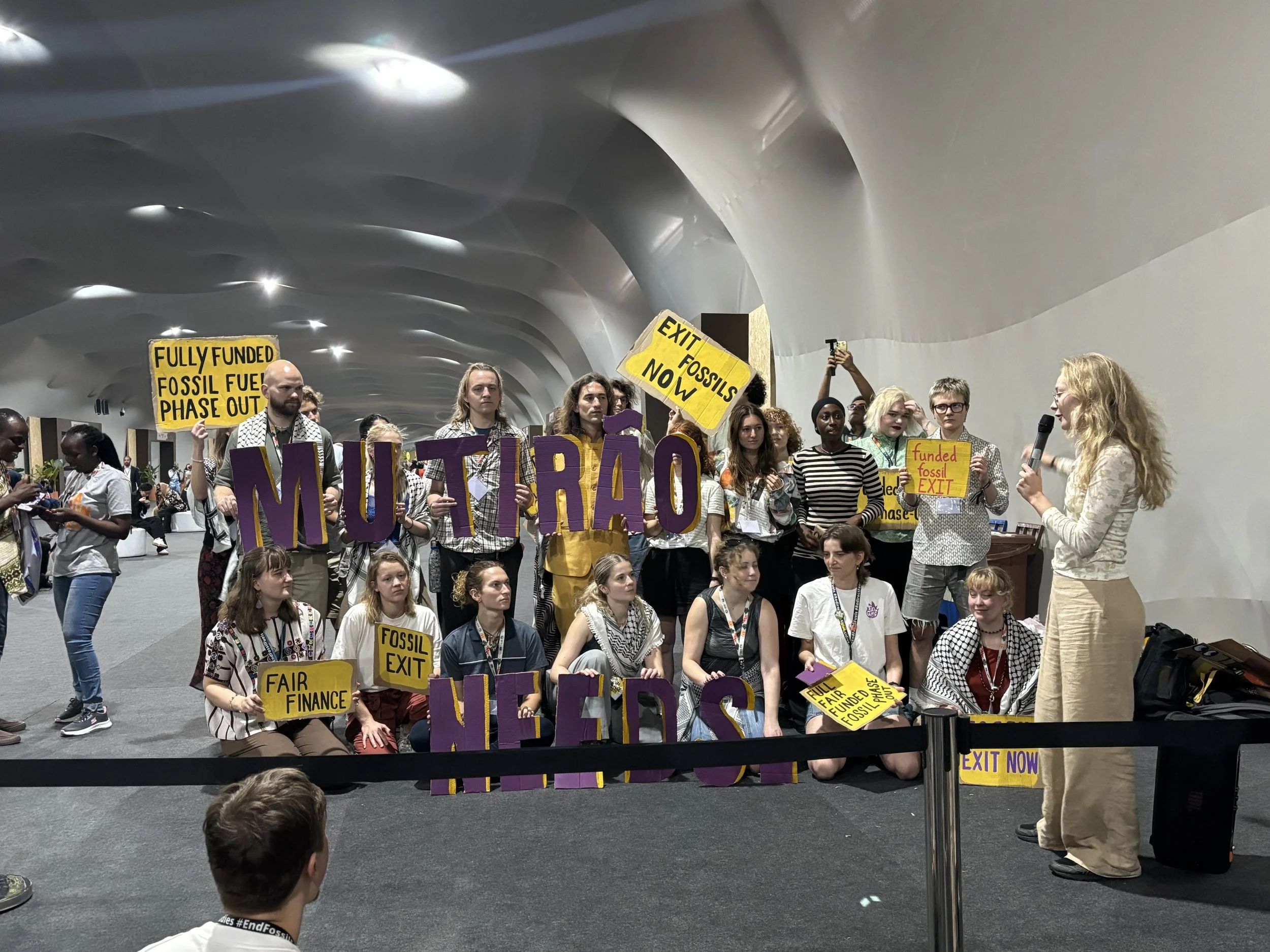
Equity was a visible and often emotional theme throughout the conference. It appeared in the scale of the pavilions, some expansive and elaborate, others modest due to limited resources, as well as thematically in protests both inside and outside of the venue. Even within negotiation rooms, inequities surfaced in subtle but significant ways, such as special political statements that reinforced longstanding tensions. These moments highlighted how questions of fairness and representation are woven into climate diplomacy.
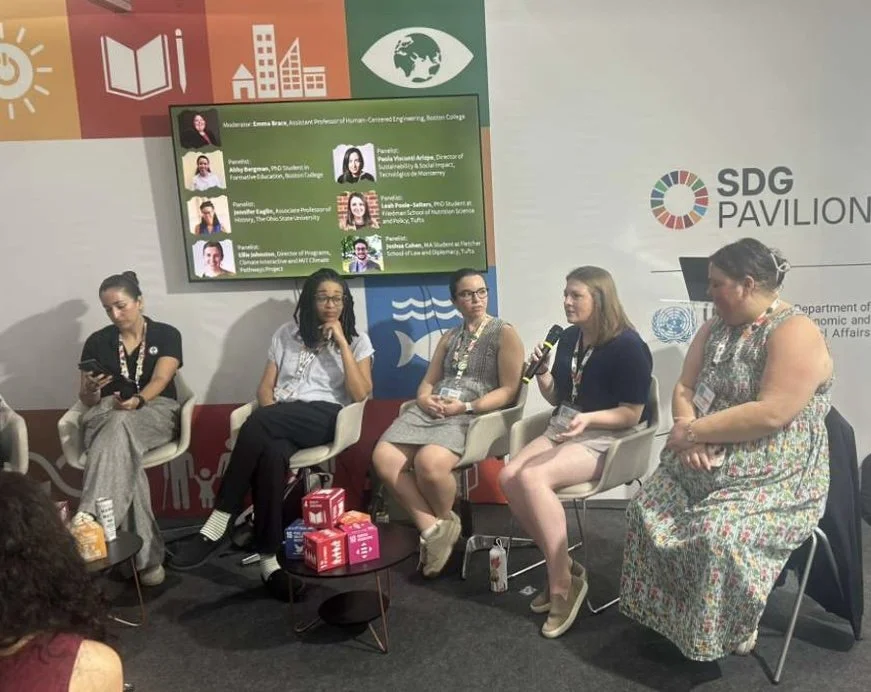
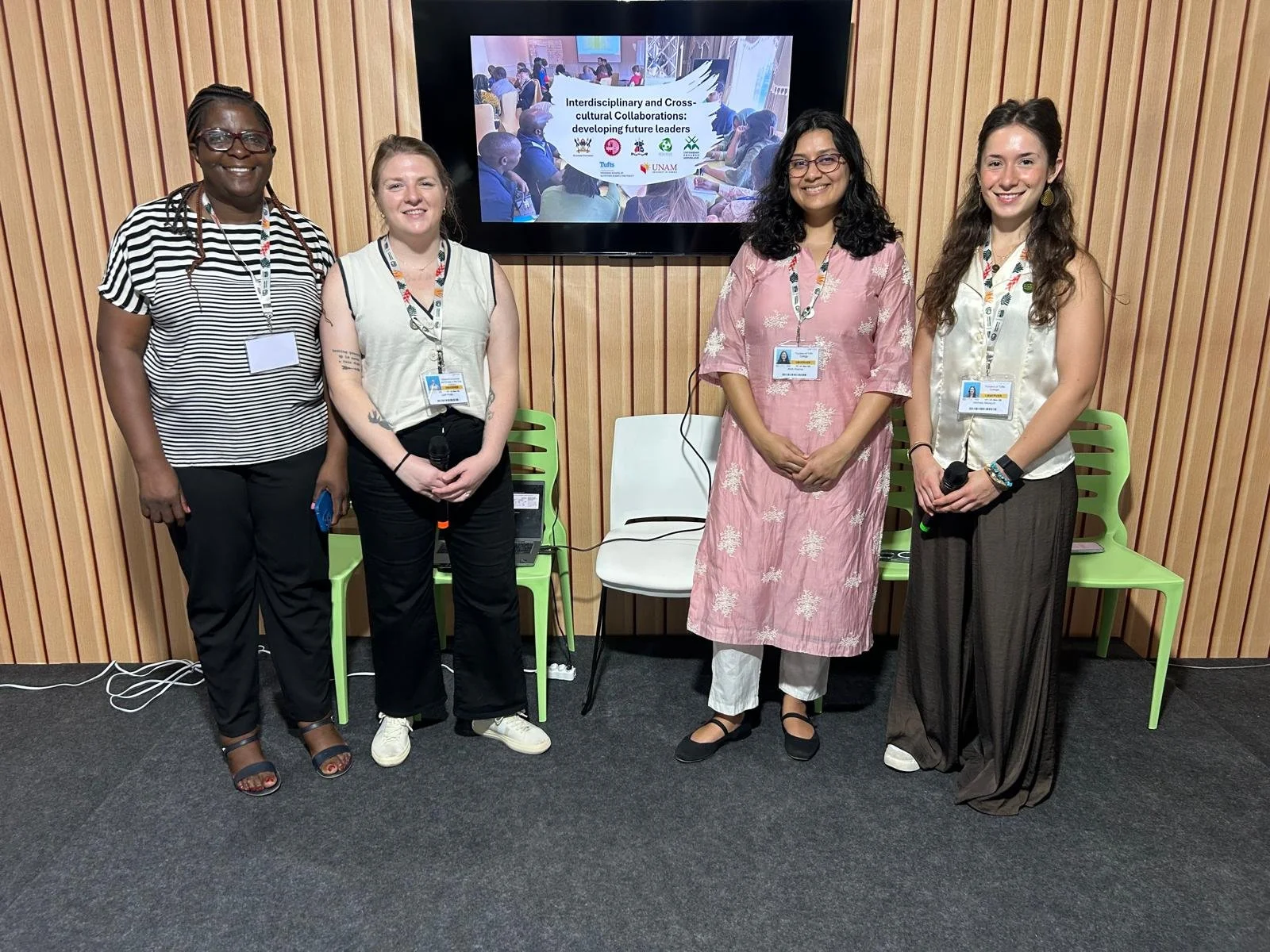
While I followed the indicator-development track most closely because of its relevance to my research, I found myself drawn to many other interesting areas via networking opportunities. I had the chance to speak with one of the developers of NROADS, a model we regularly use in the classroom, and her insights helped me think about additional applications for the tool. A conversation with a representative from CARE opened a potential pathway for how my dissertation could translate into a future fellowship. Manning the Tufts booth led to unexpected discussions, such as a lively chat with members of the U.S. Farmers and Ranchers in Action along with several conversations with insurance professionals which gave me a clearer sense of emerging opportunities in climate finance. In addition to these informal conversations, I had the opportunity to participate directly in the conference through two panel presentations, one at the SDG Pavilion on higher education’s role in achieving the Sustainable Development Goals, and another at the Higher Education Pavilion focused on the importance of transdisciplinary research.
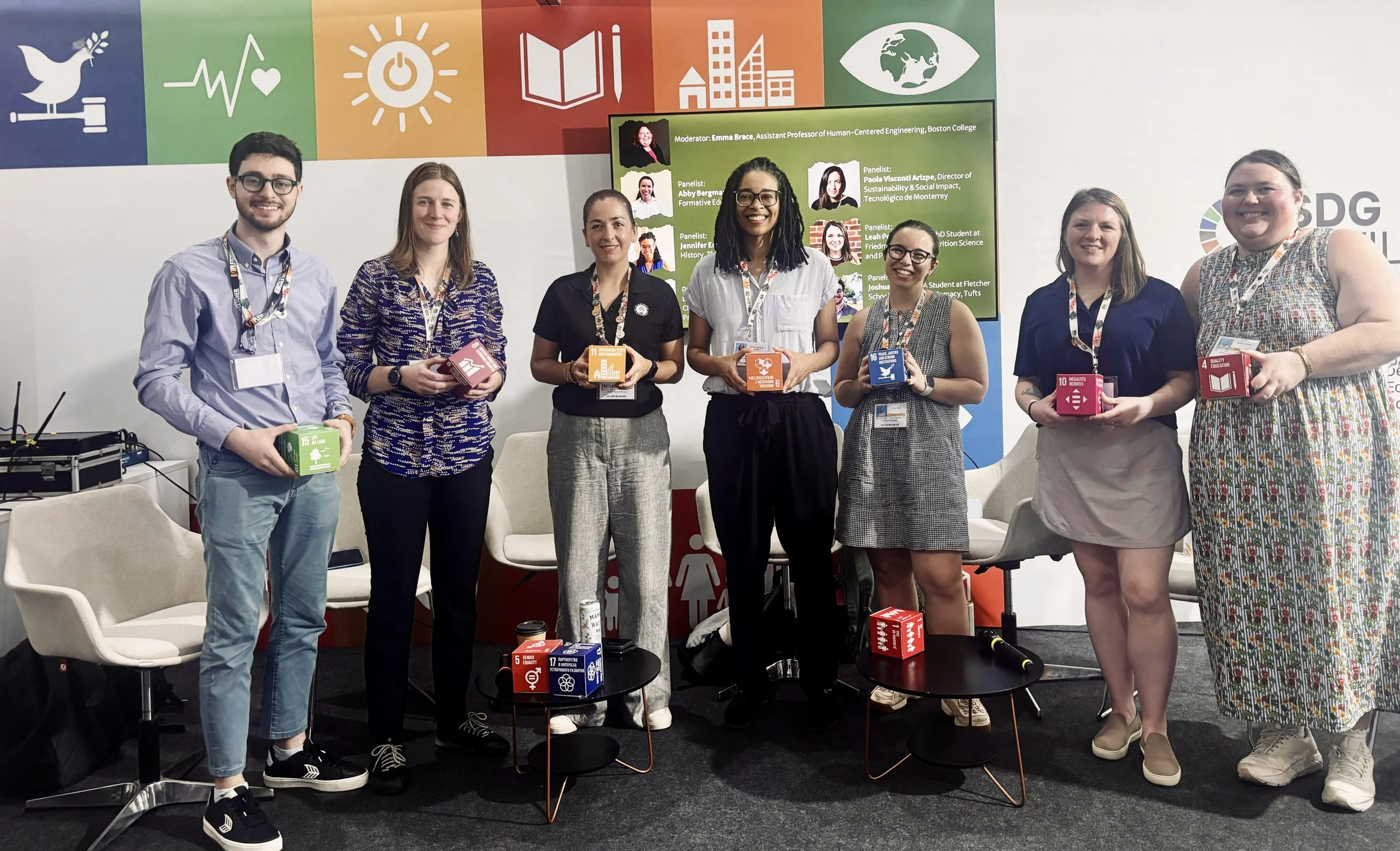
I am grateful for the opportunity to attend COP30, and for the support that made it possible. “Choose commitment over regret,” is a quote shared during one session that I believe captures the spirit of the week and what I’ll leave you with today.
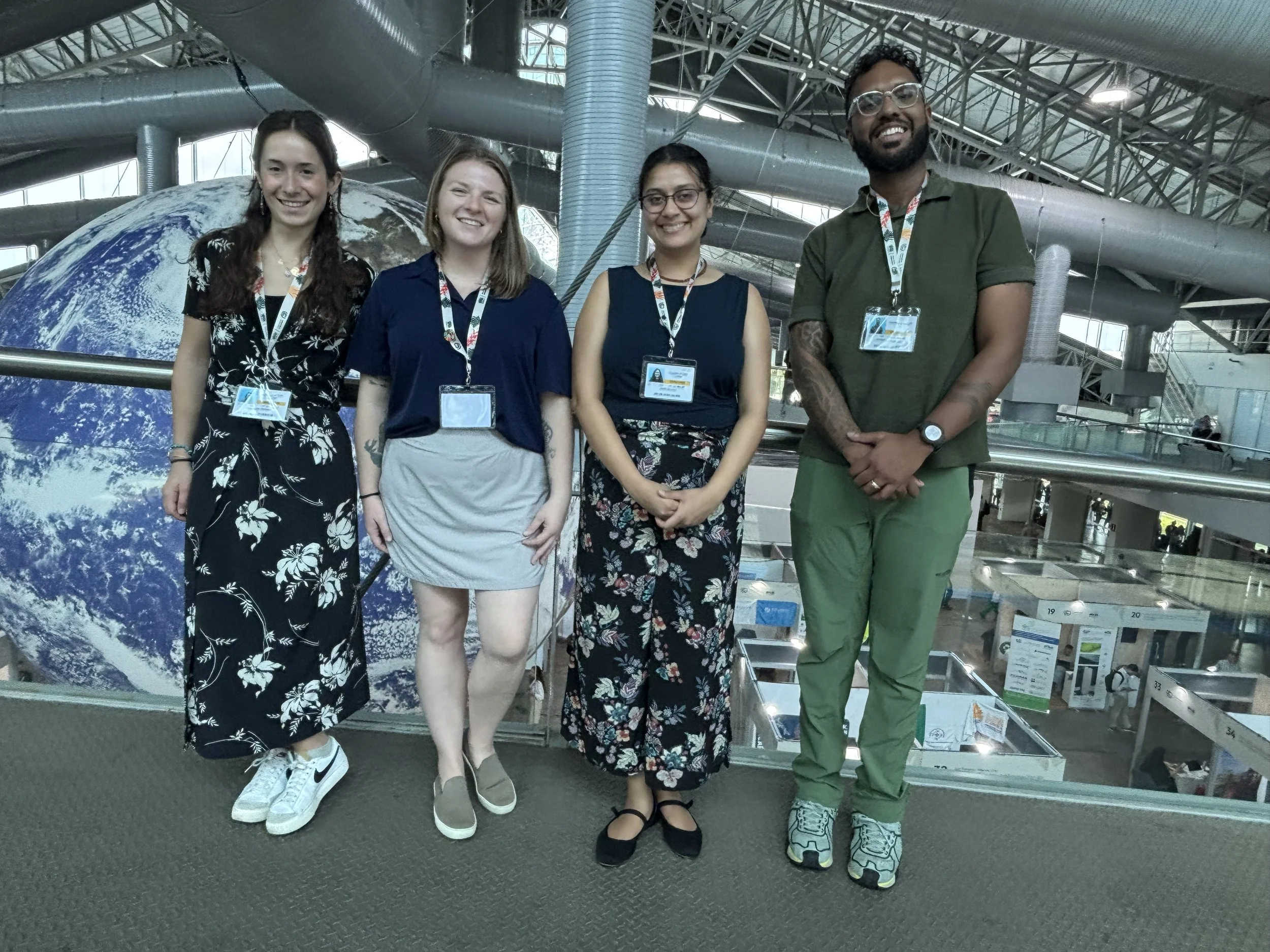
Leah Poole-Selters is a PhD Candidate at the Friedman School of Nutrition focusing on research at the intersection of climate change and health. Her dissertation aims to understand drought adaptation in southern Africa through various lenses.